Packaging design that earns attention on shelf and screen.
Structure and graphics designed for the shelf, the marketplace tile and the unboxing, so the pack sells before anyone reads the label.
In short
Packaging design is the work of shaping and decorating the pack so that it is noticed, understood and chosen, on the shelf, on a phone screen and at the door. MMC designs packaging for D2C brands, from structure to graphics, and tests hierarchy at full size and thumbnail size before preparing print-ready files.
- Seen in seconds. Brand, product, variant, claim.
- Works on a tile. Tested at thumbnail size.
- Ready to print. Files checked with your printer.
Read the full guide
Monday Marketing Company (MMC) designs packaging for D2C brands, from structure to graphics.
What packaging design covers.
Six steps to a pack that wins attention on a shelf or in a feed.
- Shelf and category study. How competitors look and where your pack can stand apart.
- Structure. Box, pouch, label or sleeve formats chosen for protection, cost and unboxing.
- Visual hierarchy. What the buyer reads first, second and third, designed deliberately.
- Thumbnail testing. Designs checked at small marketplace and quick-commerce tile sizes.
- Print readiness. Artwork prepared with the right files, colours and checks for your printer.
- Range systems. A system that lets new variants join the range without a redesign.
Why brands choose MMC for this
Our packs are designed for the shelf and the screen at once.
- Built for online and offline. A pack has to work as a tiny image on a phone and as an object in hand.
- Brand strategy behind it. Packaging follows positioning rather than trends.
- Print know-how. We prepare artwork so it prints as intended.
- Works with your marketing. Pack claims and visuals match what ads and listings say.
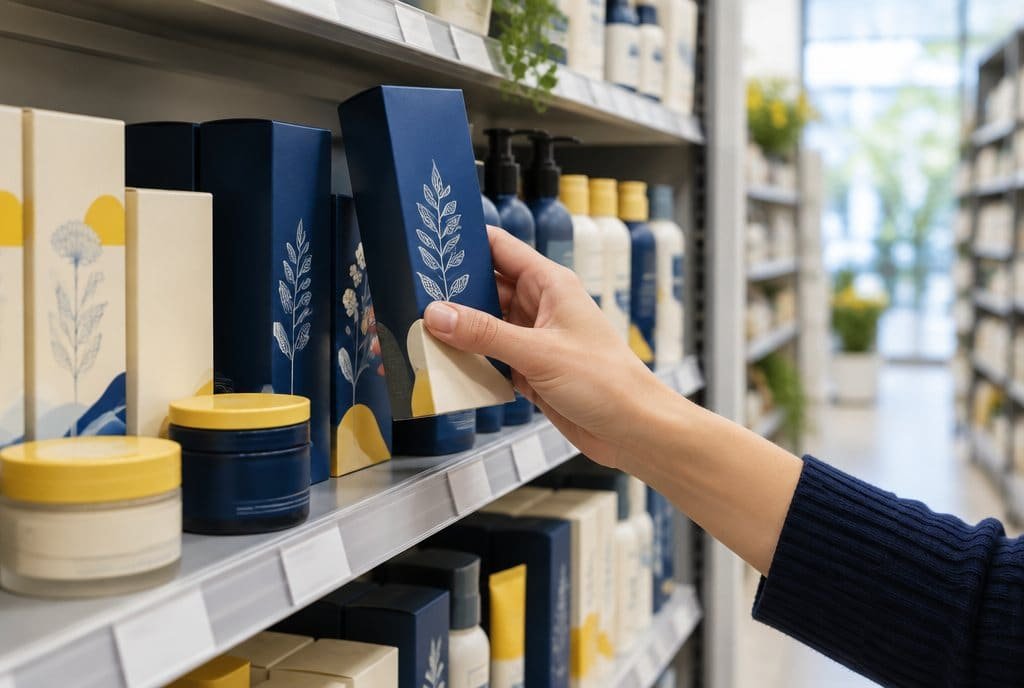
Understand the shelf Designed to be seen among real competitors
Category shelf
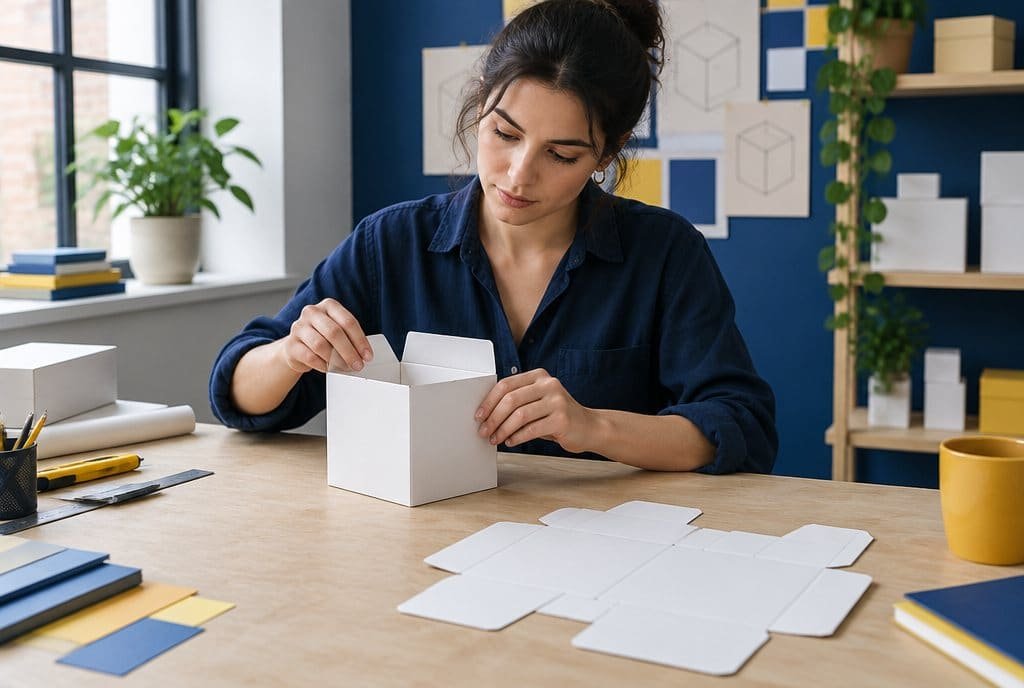
Your packDesign the structure Flat first, then folded
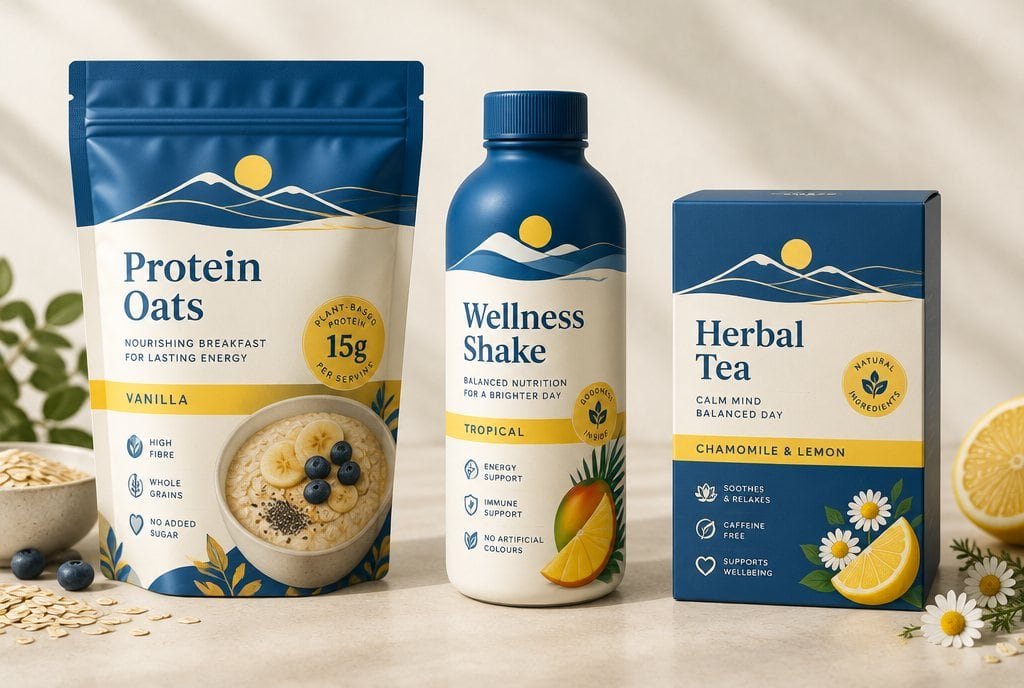
Set the hierarchy Then test it at tile size
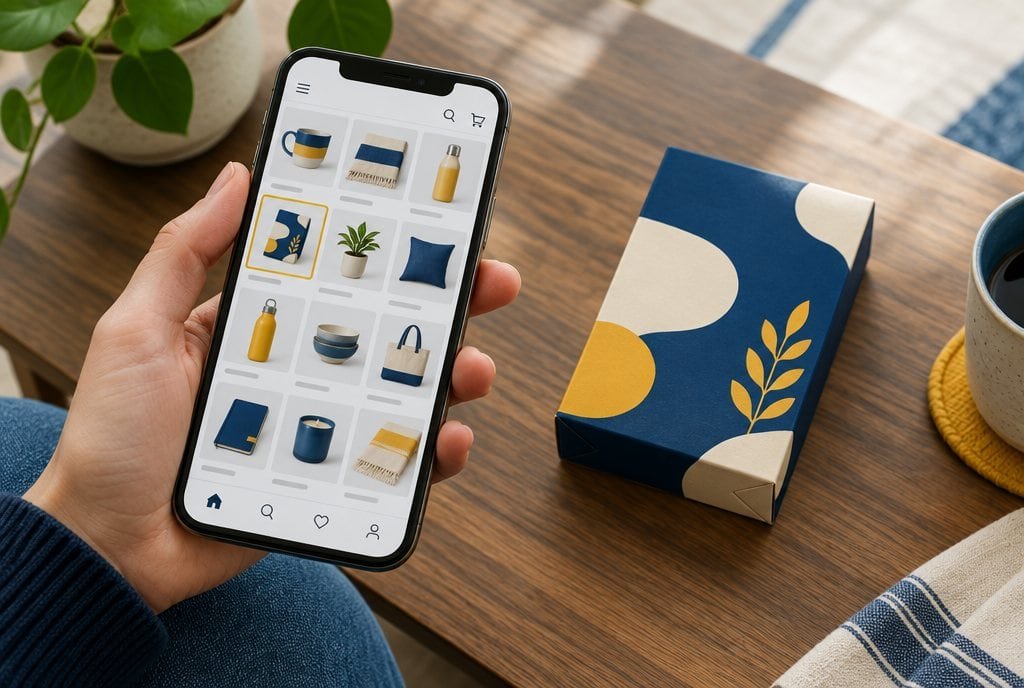
Tile size
12Still readsPrint and shelf Checked with the printer, seen on the shelf
The work, shown
How a pack goes from flat file to shelf.
- 01
Study the shelf and the screen.
The category shelf and marketplace listings show what your pack has to stand out from.
- 02
Design structure and materials together.
Dieline, board and protection are set around the product and its shipping cost.
- 03
Set the hierarchy, then test at tile size.
Brand, product, variant and claim are ordered, then checked small, as marketplaces and quick commerce show them.
- 04
Prepare print files and show them on shelf.
Dielines, colour and label areas are checked with your printer, then placed in a shelf render.
Where it leaks
Five ways packaging goes wrong.
- 1
Category and shopper research
Designing a pack in isolation.
A pack is judged next to its neighbours. What stands out depends on what surrounds it.
How we run it. We study the category shelf and marketplace listings, so the pack is designed to be seen among real competitors.
- 2
Structural design
Choosing a box because it is cheap or standard.
Shape and material affect how a pack feels, how it protects the product and what it costs to ship.
How we run it. We design structure and materials around the product, protection, shipping cost and the feeling you want when it is opened.
- 3
Graphic design
Giving every message the same weight.
When brand, product, variant and claims all shout, none is read.
How we run it. We set a clear order of information, so a shopper sees the brand, understands the product and finds the variant at a glance.
- 4
Tile and thumbnail testing
Judging the pack only at full size.
Most first impressions now happen on a phone screen, where the pack is a thumbnail.
How we run it. We test packs at thumbnail size and on marketplace and quick-commerce tiles, so they stay clear when small.
- 5
Artwork and production
Sending artwork to print without checks.
Colour, dielines and label information are easy to get wrong, and costly to reprint.
How we run it. We prepare print-ready artwork, check colour and dielines, and leave room for the label information your product requires.
Selected work
A few of the brands we work with.
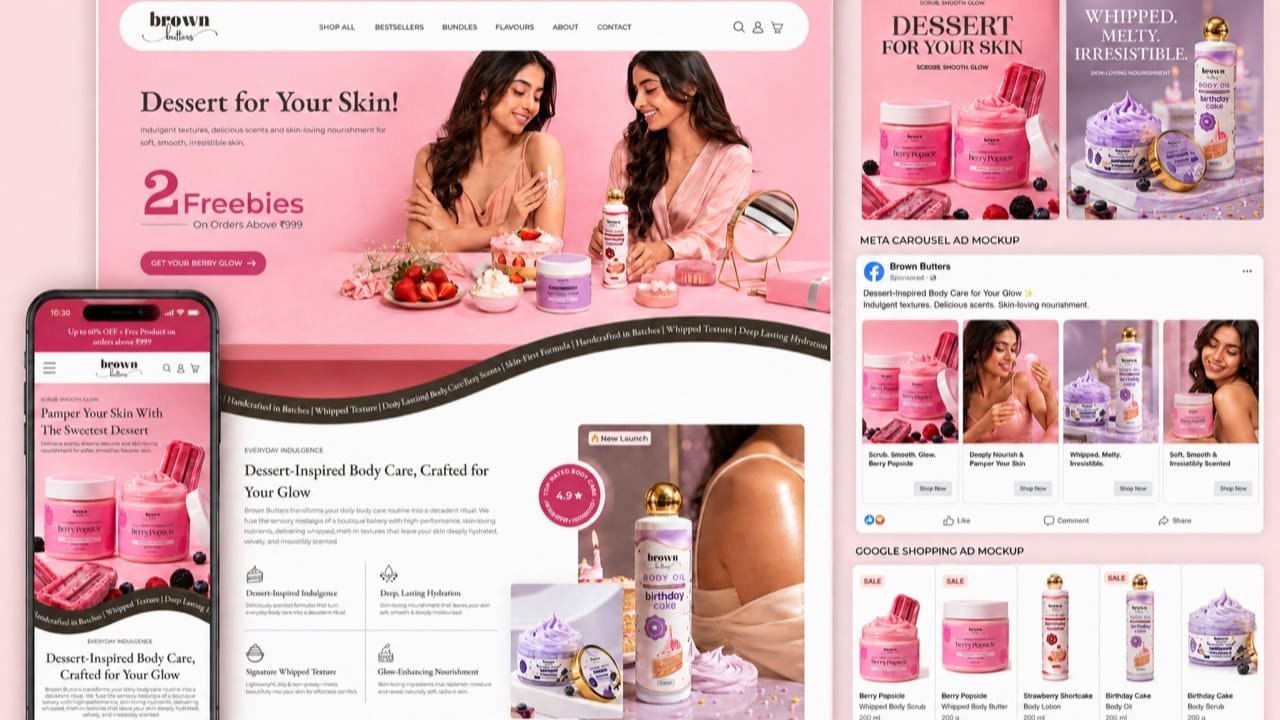
 Body care: a website and creative for a product where the pack leads.See the work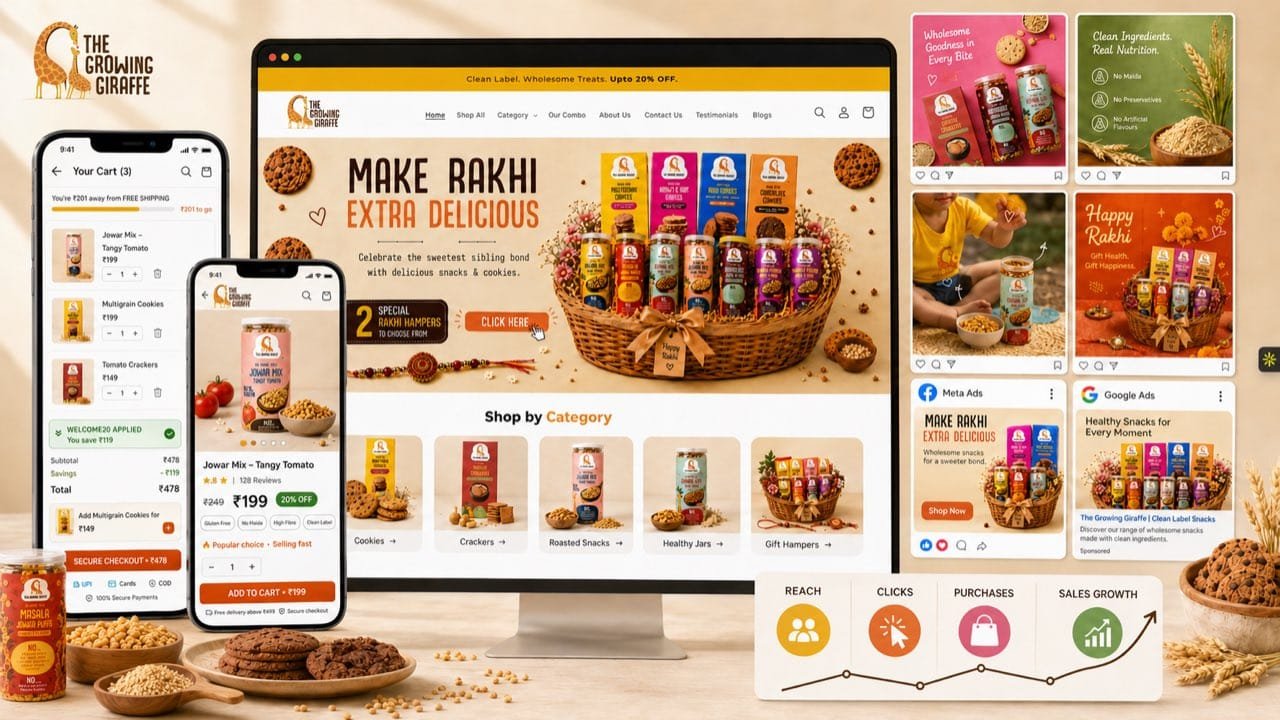
 Gifting: ads and listings where the pack photo does the selling.See the work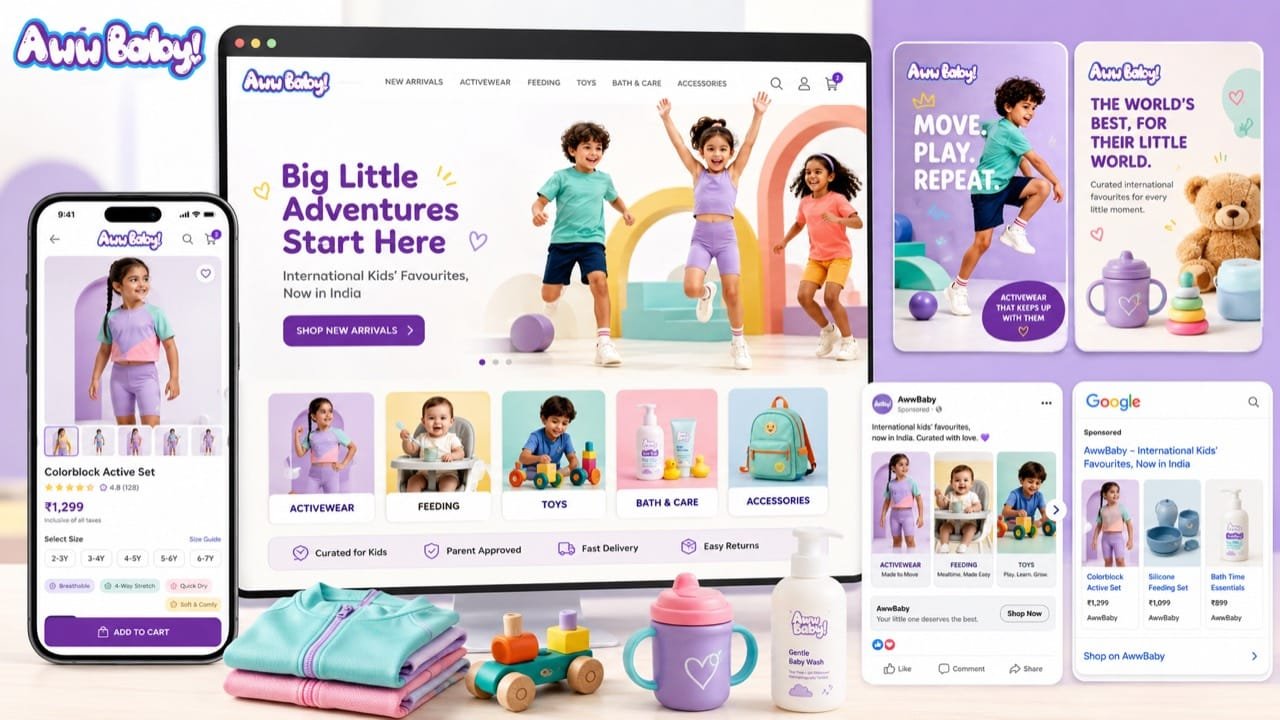
 Baby products: variants that have to read at a glance in ads and listings.See the work
A few more. Hover or tap a logo.
What we read
- Legibility at thumbnail size
- Whether the pack still reads on a small screen.
- Distinction on shelf
- Whether it stands out among real competitors.
- Protection and shipping
- Whether it survives the journey and its cost.
- Print accuracy
- Whether colour and dielines will hold in production.
Each one is tested, not assumed.
Your first 90 days
How we design a pack, week to week.
Days 1 to 30
Understand the shelf
Category and shopper research, on the shelf and on screen.
You get: A view of what your pack must beat.
Days 31 to 60
Design structure and graphics
Structure, materials and graphics are designed together, not one after another.
You get: Designs that work as a pack, not only a print.
Days 31 to 60
Test small
Hierarchy and legibility are tested at full size and tile size.
You get: A pack that reads on a phone.
Days 61 to 90
Prepare for print
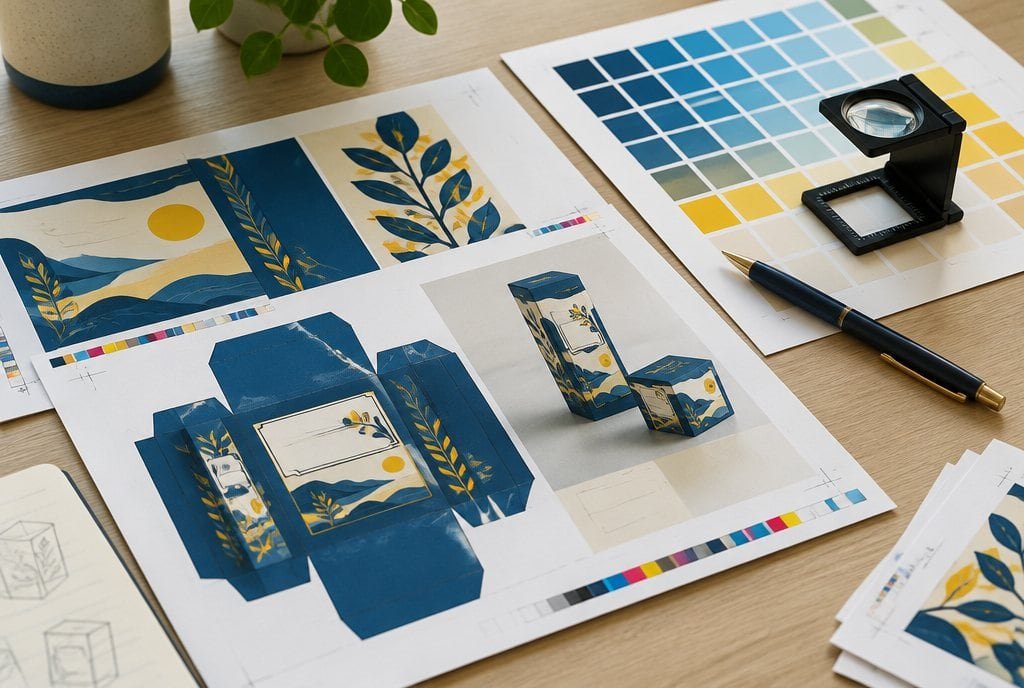
Print-ready files, dielines and colour are checked with your printer.
You get: Artwork ready to produce.
Timing depends on scope. We agree it with you before work starts.
Packaging for brands that sell on shelf and screen.
A good fit
You sell physical products and the pack is not helping the sale.
D2C brands on marketplaces and quick commerce need a pack that reads at tile size and feels right at the door.
Not a fit
You want only a quick label change, or have no plan for production.
A pack touches structure, cost and print, so it needs a plan.
Common questions
Questions about packaging design.
What is packaging design?
Packaging design is the work of shaping and decorating the pack so it is noticed, understood and chosen, on the shelf, on a phone screen and at the door.
How does packaging design work with MMC?
We study the shelf and the screen, design the structure and graphics together, test hierarchy at full size and thumbnail size, and prepare print-ready files.
What does packaging design cost?
We quote per project, after a call, once the scope is clear: what you need, how much of it, and what it has to connect to. The scope and the fee are agreed in writing before work starts.
Do you guarantee results?
No. Nobody can guarantee a pack will lift sales. We commit to research, a tested hierarchy and print-ready files, and honest advice.
Who is packaging design for?
D2C brands with physical products, mostly. B2B companies that sell packaged products use the same process, from the shelf study to print-ready files.
What do you need from us?
Your product and range, brand assets, sizes and materials constraints, your printer's specifications, and where the pack will be sold.

See how your pack looks at a glance.
On a call, with a senior strategist. We look at your packaging on the shelf and on a screen.
Run the numbers, read the method
Tools and guides behind the numbers.
 Guide
GuideReady when you are
See how your pack looks at a glance.
On a call, with a senior strategist. We look at your packaging on the shelf and on a screen.