SEO that gets you found by buyers and AI.
Technical health, content built around search intent, and the structure that lets search engines and AI assistants understand and quote you.
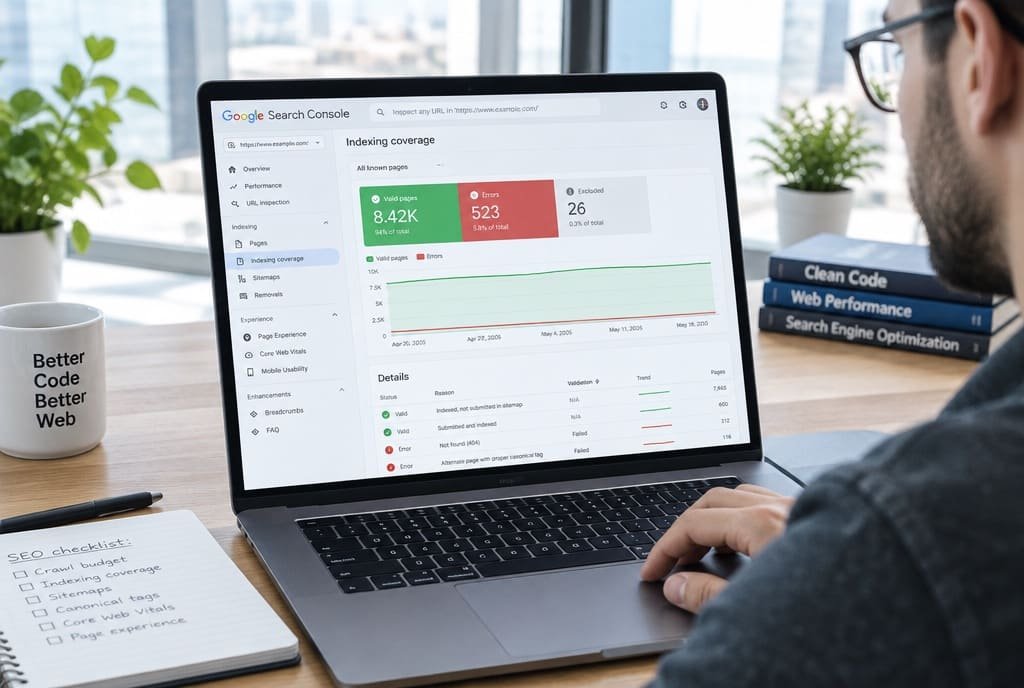



In short
SEO is the work of making your website easy for search engines and AI assistants to find, understand and recommend for the searches your buyers make. MMC does SEO for D2C, B2B and education brands, including the answer-engine work that decides whether AI assistants quote you, and reports on qualified traffic, enquiries and orders.
- Technical foundation. A site that loads fast and can be crawled and understood.
- Content for intent. Pages built around what buyers actually search, in the order they search it.
- Structured to be quoted. Clear definitions and structured data, so answers can be lifted accurately.
Read the full guide
Monday Marketing Company (MMC) does SEO for D2C, B2B and education brands, including the answer-engine work that decides whether AI assistants quote you.
SEO now includes AI search
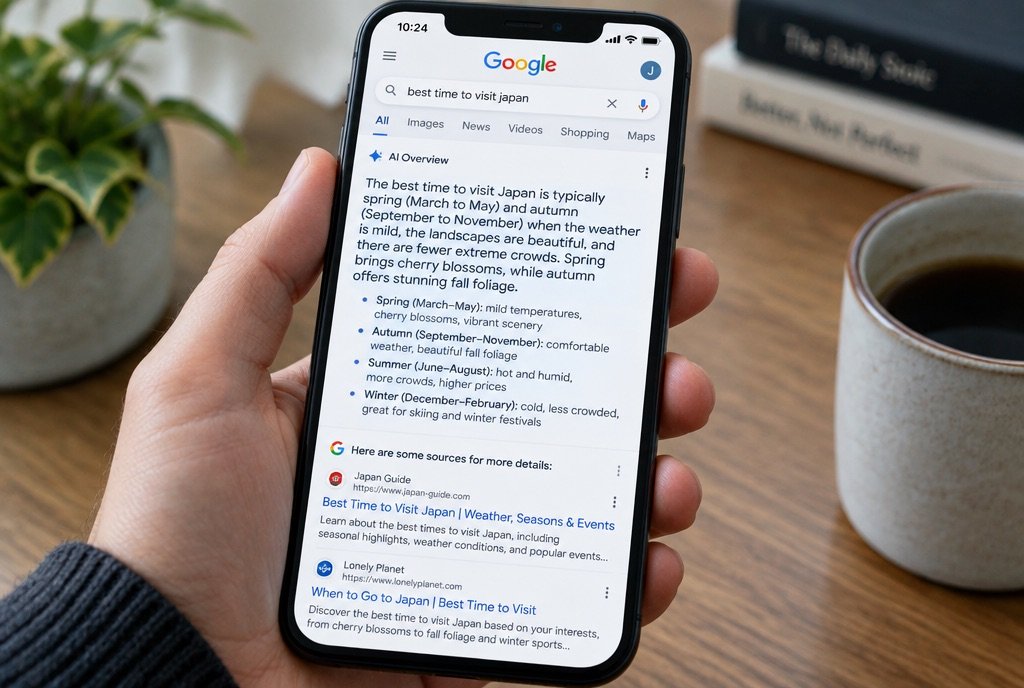
Classic SEO still gives a site its base: pages that load, can be crawled and answer the search. On top of that, buyers now get answers from AI summaries and assistants, so the same pages also have to be easy to quote. We plan that as one programme under AI SEO.
Two disciplines do most of that work. Answer-engine optimisation shapes pages so a snippet, a voice reply or an AI summary can lift a clear answer. Generative-engine optimisation builds the consistent sources and mentions that tools such as ChatGPT, Perplexity and Gemini draw on.
Local searches and the content behind them
Searches by place start on the map, not on your site. A well-kept Google Business Profile answers them with hours, services and reviews.
The pages that rank and get quoted are built from buyer questions. Our content marketing work plans and writes them, so search, answers and social share one research base.
What we do in SEO.
From the technical base to being quoted by AI answers, for D2C, B2B and education sites.
- Technical foundation. Crawling, indexing, speed and site structure fixed so search engines can read the site properly.
- Keyword and intent research. The questions buyers ask, grouped by what they want to do next.
- Page and content builds. Category, product, service and guide pages written to rank and to convert.
- AEO and GEO. Answer-first copy, schema and clear entities so AI answers can quote you.
- Authority and links. Earned mentions and relevant links that build trust without shortcuts.
- Local and marketplace search. Google Business Profile and listing work where buyers search by place or by marketplace.
Why brands choose MMC for SEO
SEO compounds. We build it so the work still pays after the month ends.
- Search and conversion together. We write for ranking and for the sale, because traffic that does not convert is not growth.
- Ready for AI search. Pages are structured to be found in classic results and cited in AI answers.
- Joined up with paid. Search data feeds our ads, and ad data shows which pages deserve more SEO effort.
- Reports without vanity. We report on enquiries and orders from search, not only on rankings.
AI answer
Pick a stable shoe with firm midfoot support and room in the toe box. Try pairs on late in the day, when feet are at their widest.
Featured snippet
A stable running shoe has a firm midsole, a wide base and room in the toe box.
yourstore.example › running › flat-feet- guide.example
- reviews.example
- forum.example
- yourstore.example › guidesChoosing a running shoe for flat feet
Answer tracking Are we cited when buyers ask?
- how to choose a running shoeCited
- running shoe for flat feetCited
- running shoe for a first marathonNot yet
The work, shown
What we actually do to get you found.
- 01
Fix what stops pages being found.
Speed, crawling and page structure come first, because good content cannot rank on a site search engines struggle to read.
- 02
Mark up pages so results show more.
Structured data tells search what each page is, so your result can move up and carry more detail.
- 03
Write the direct answer first.
A short, plain answer opens each page, so search can lift it as a featured snippet.
- 04
Get quoted in AI answers.
Clear definitions, FAQs and steady facts give assistants something accurate to cite, with your page as the source.
- 05
Track questions, not just rankings.
A fixed list of buyer questions is checked month after month, with enquiries and orders reported beside it.
Where it leaks
Five ways SEO goes wrong.
- 1
Technical SEO
Publishing content on a site search engines struggle to read.
Slow pages, broken links and blocked resources stop good content from being found, however well it is written.
How we run it. We audit and fix the technical basics: speed, crawlability, mobile usability, page structure and duplicate content.
- 2
Search intent and topics
Writing about what you want to say, not what people search.
Buyers search in stages, from a vague problem to a specific supplier. Content that ignores those stages misses most of them.
How we run it. We map the searches buyers, parents and shoppers make, group them into topics, and plan content that answers each stage.
- 3
Landing and category pages
Thin pages that neither rank nor persuade.
A page that ranks but does not answer the question or show the next step sends traffic away.
How we run it. We build category, service and landing pages with clear structure, answers and a next step, so traffic becomes enquiries and orders.
- 4
Answer-engine optimisation
Ignoring how AI assistants pick their sources.
More people now ask an assistant instead of scrolling results. Assistants tend to quote pages that give a clear, well-structured answer.
How we run it. We add clear definitions, FAQs and structured data, so that search engines and AI assistants can understand and accurately quote your pages.
- 5
Authority and reporting
Judging SEO on rankings alone.
A ranking that brings no enquiries or sales is not a result. Visibility only matters when it leads to business.
How we run it. We build authority through relevant mentions and links, and report on qualified traffic, enquiries and orders rather than rankings alone.
Your first 90 days
How we run SEO, month to month.

Days 1 to 30
Audit and fix the foundation
Crawl, speed, structure and indexing are checked and the technical blockers fixed first.
You get: A site search engines can read cleanly.

Days 31 to 60
Map the buyer's questions
We build the topic map around the searches your buyers, parents or students actually make, and the pages that answer them.
You get: A content plan tied to search intent.
Days 61 to 90
Publish, structure and report
Pages go live with clear definitions and structured data so answer engines can quote them, and reporting follows qualified traffic.
You get: Progress read in enquiries and orders, not rankings alone.
The days show the order of the work, not a promise of results. What we find in your account decides how long each part takes.
SEO for brands that are in it for the long run.
A good fit
You want buyers to find you without paying for every click, and can wait for it to compound.
SEO suits D2C brands with a catalogue, B2B companies whose buyers research alone, and colleges whose families search for courses (see college admission marketing and education marketing).
Not a fit
You need leads next week, or a guaranteed ranking.
Search takes time and nobody controls rankings, so urgent demand is better served by paid media while SEO builds.
Common questions
Questions about SEO.
What is SEO?
SEO is the work of making your website easy for search engines and AI assistants to find, understand and recommend for the searches your buyers make, so qualified visitors find you without paid clicks.
How does SEO work with MMC?
We audit and fix the technical foundation, map your buyers' questions to pages, write clear answers that search engines and AI assistants can quote, and report on qualified traffic, enquiries and orders.
What does SEO cost?
A monthly scope, agreed after a call. It is written down so you can see what each month covers. We do not publish a price list, because the right scope depends on your site, your market and how much you want done.
Do you guarantee results?
No. Nobody can honestly guarantee a ranking or a timeline. We commit to the work in the monthly scope and to reporting on qualified traffic, enquiries and orders.
Who is SEO for?
D2C brands with a catalogue, B2B companies whose buyers research alone, and education brands whose families search for courses. Not only D2C. We work with D2C, B2B and education brands, and set the work up differently for each: D2C on contribution margin and repeat purchase, B2B on the cost of a qualified lead, education on enquiries, visits and admissions.
What do you need from us?
Access to your site, Search Console and Analytics, your product or course list, and someone who can approve content. If you are mid-redesign, tell us first.

Find out what search is missing about you.
On a call, with a senior strategist. We look at how you appear in search and in AI answers.
Run the numbers, read the method
Tools and guides behind the numbers.
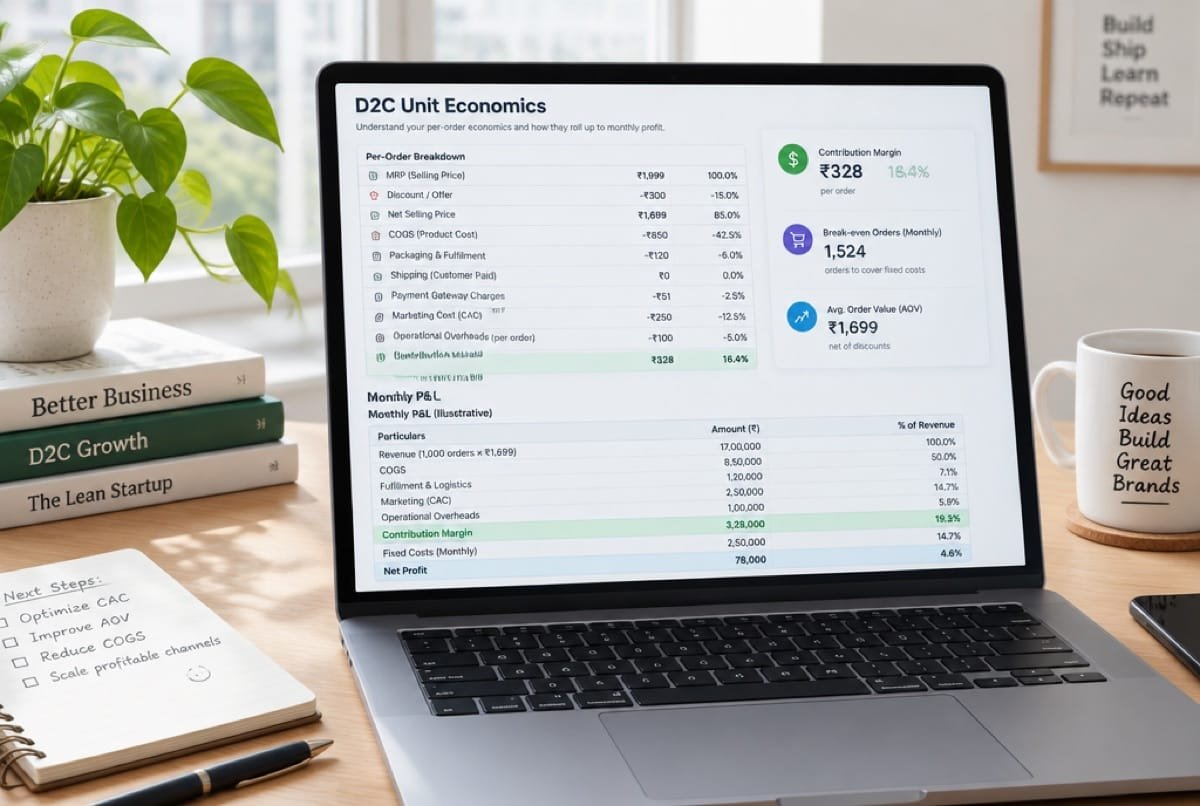 CalculatorUnit economicsWhat one order leaves behind, from CM1 to CM3.Open the calculator
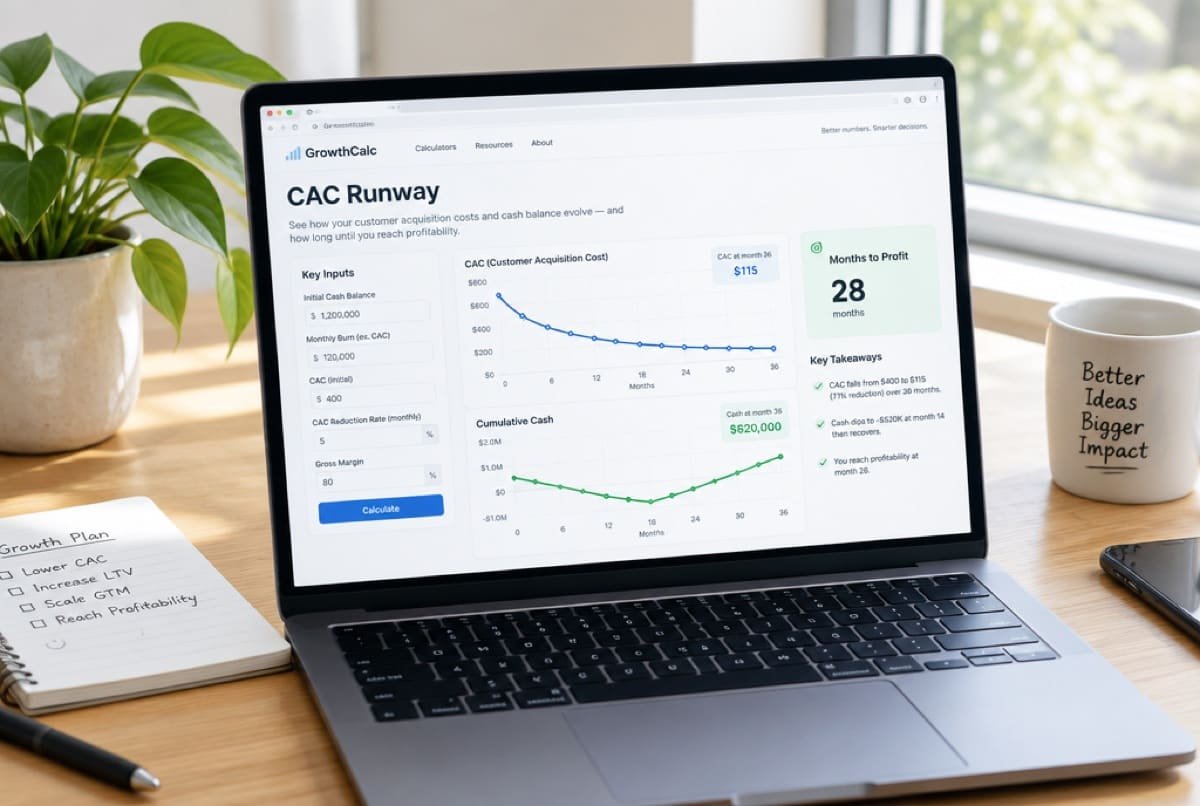 CalculatorCAC runwayHow long a new brand burns before it turns.Open the calculator
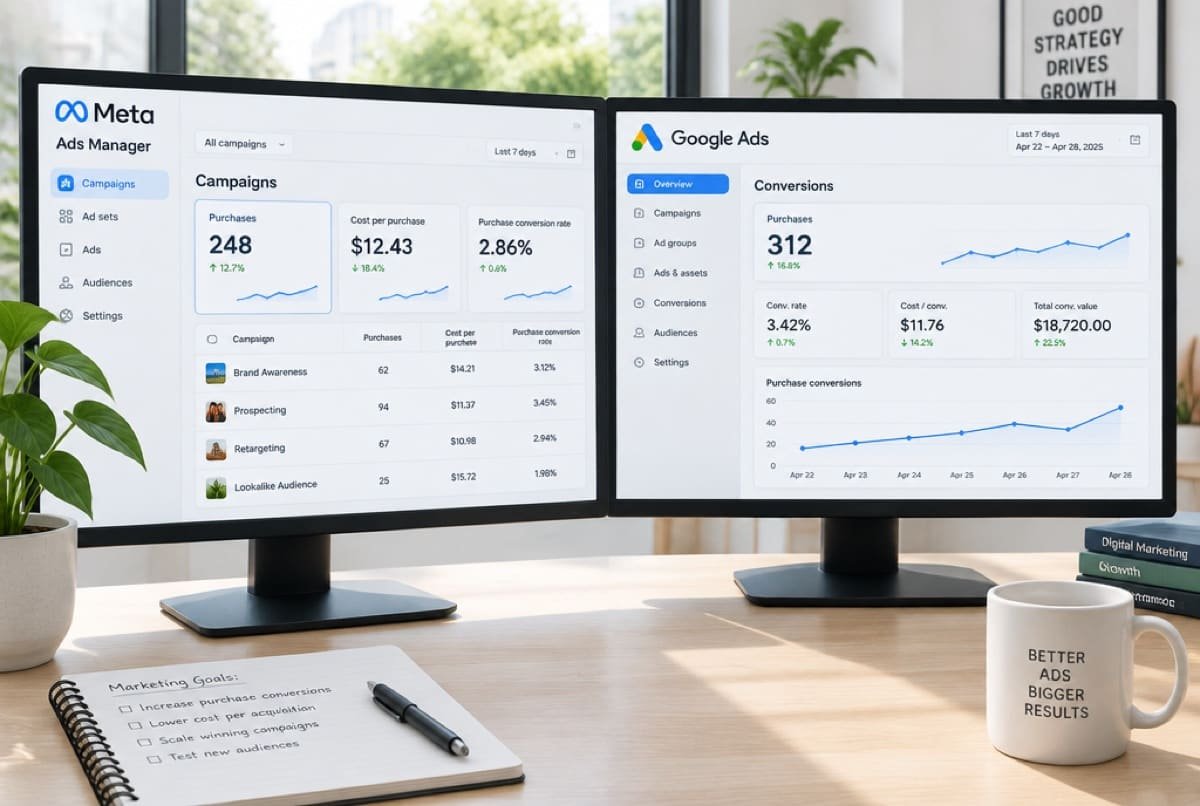 GuideWhy ad dashboards over-count salesMeta, Google and your store each count their own conversions, so the totals never match. Here is why dashboards over-count and how to read results anyway.Read the guide
Ready when you are
Find out what search is missing about you.
On a call, with a senior strategist. We look at how you appear in search and in AI answers.