White-label app development for agencies that sell apps.
iOS and Android apps built from your client's brief, with design, testing and release support, delivered under your brand.

In short
White-label app development is mobile app work that MMC delivers for your agency's client while you lead the relationship. We take the brief, shape the journey, build for iOS and Android, test and support store release, then hand over code and documentation under your brand.
- You lead, we build. You hold the client, we handle design, code and release.
- iOS and Android. Built from your client's brief with testing on real phones.
- Code you can hand on. Documentation and ownership terms are agreed up front.
Read the full guide
Monday Marketing Company (MMC) delivers app development for agencies and works behind your brand. You own the client relationship; we do the work.
How an app project is split with your agency
App projects fail when the brief is vague. We help you shape it before build: users, journeys and what the first release should and should not do.
See our direct work on the mobile app development page. Design can come from white-label design.
What we handle in white-label app development.
From brief to store release.
- Discovery. Users, goals and scope for the first release.
- UX and UI. Journeys and screens.
- Development. iOS and Android builds.
- Integrations. APIs, payments and analytics.
- Testing. Device and flow testing.
- Release support. Store listing and submission help.
Why agencies hand their app projects to MMC
A delivery partner that behaves like part of your team.
- Scope kept honest. We scope the first release tightly.
- Documented. Code and notes handed over.
- Under your brand. Deliverables and reports can carry your name and format. You decide what the client sees.
- NDA first. We sign an NDA before we see client details, and we do not approach your clients.
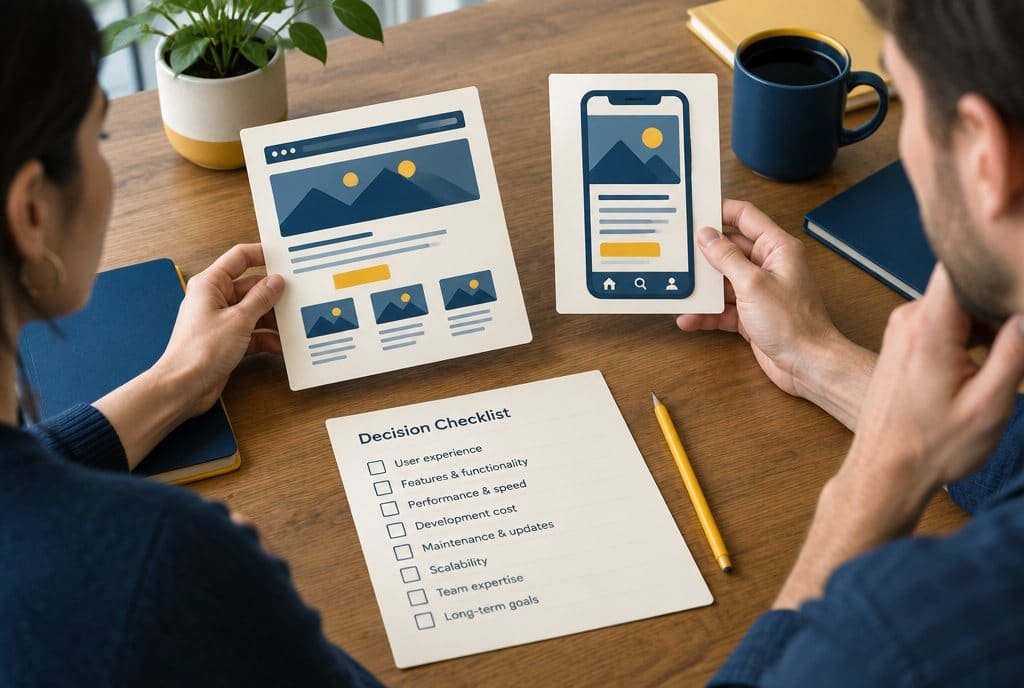
App or mobile website? Decided on how customers behave
Mobile website
- Reached from search and ads
- No install needed
- Often enough
App
- Customers come back often
- Uses phone features
- Pays back only with repeat use
The core journey One task, made fast
Build and test On the phones customers use
- CodeDone
- Device testsDone
- BuildDone
Events tracked from release one
App openAdd to cartReorderReturn visitRelease and improve Launch is the first release
- Beta
- Store review
- Live
- Next release
The work, shown
What we actually do on an app project.
- 01
Test if the client needs an app.
We compare an app with a good mobile site on repeat use and phone features, and give you an honest verdict to share.
- 02
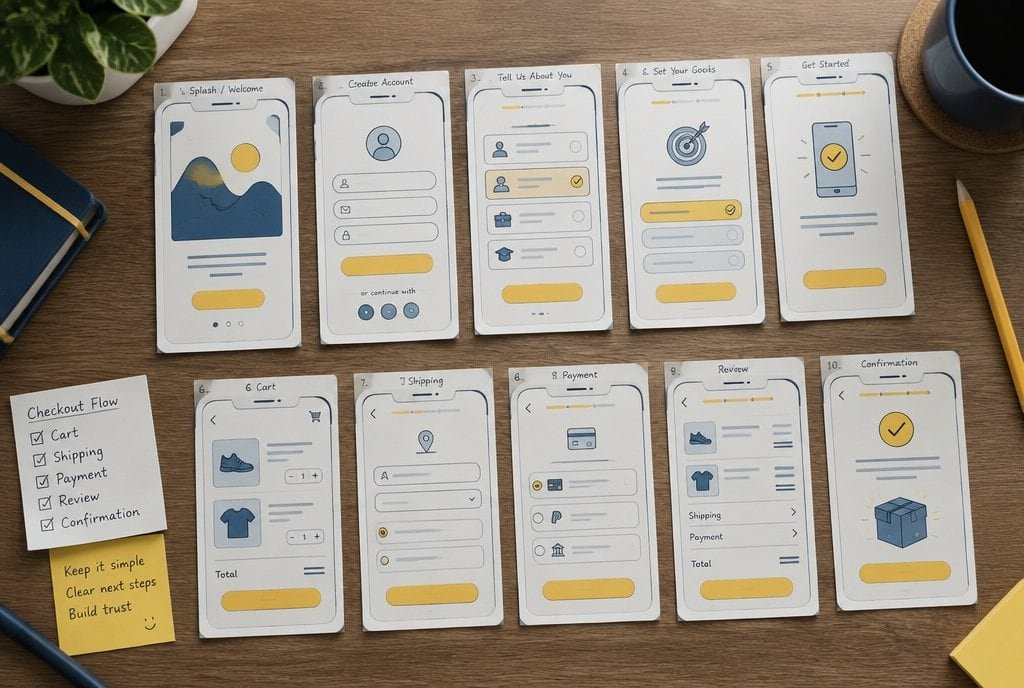
Map the core journey on three screens.
Home, product and reorder are joined into one path your client can approve before any code.
- 03
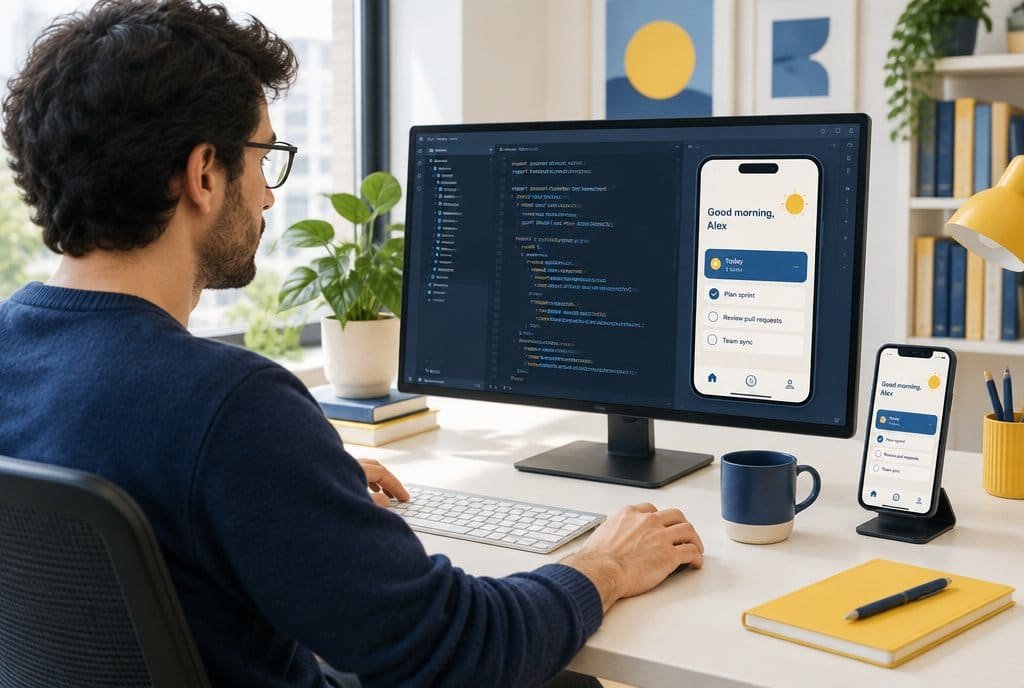
Build, test on devices and track events.
Code is built and tested on real phones, with the events your client needs to track set up from day one.
- 04
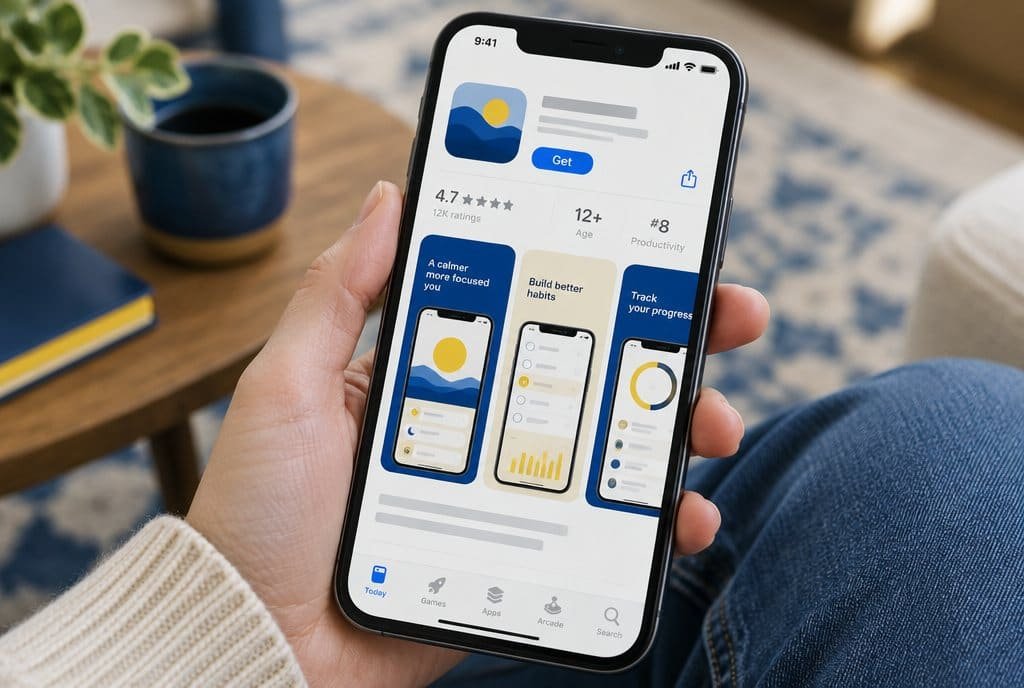
Support release and the next version.
Store listing, beta, review and live are handled with you, and the next release is already on the list.
Where it leaks
Five ways white-label app projects go wrong for agencies.
- 1
Scope
Letting the brief grow every call.
Features arrive in meetings and nothing leaves, so the date and the fee both break.
How we run it. A written scope with a feature list and a change process, so new asks are quoted instead of absorbed.
- 2
Journey
Signing off a flow that nobody tried on a phone.
Thumb reach and small screens expose problems that a slide deck hides.
How we run it. A clickable journey tested on real phones before code, so the first build is the right build.
- 3
Release
Promising a launch date before store review.
A rejection or a missing asset costs days that your client counts on you for.
How we run it. We prepare listings, privacy details and test builds early, and tell you where review risk sits.
- 4
App data
Shipping without events to learn from.
Without data you cannot show your client what the app earned or where users drop.
How we run it. Key events are set up during the build, with a plain note of what each one measures.
- 5
Code and handover
Leaving code ownership vague.
When the relationship changes, vague ownership becomes a dispute you did not plan for.
How we run it. Ownership terms are written into the agreement, and code and documentation are handed over under your brand.
How onboarding runs
How we onboard you for apps, step by step.

Stage 1
NDA and app scope
We sign the NDA, take your client's brief and write a scope with the app-or-site decision stated.
You get: A written scope and a platform recommendation.
Stage 2
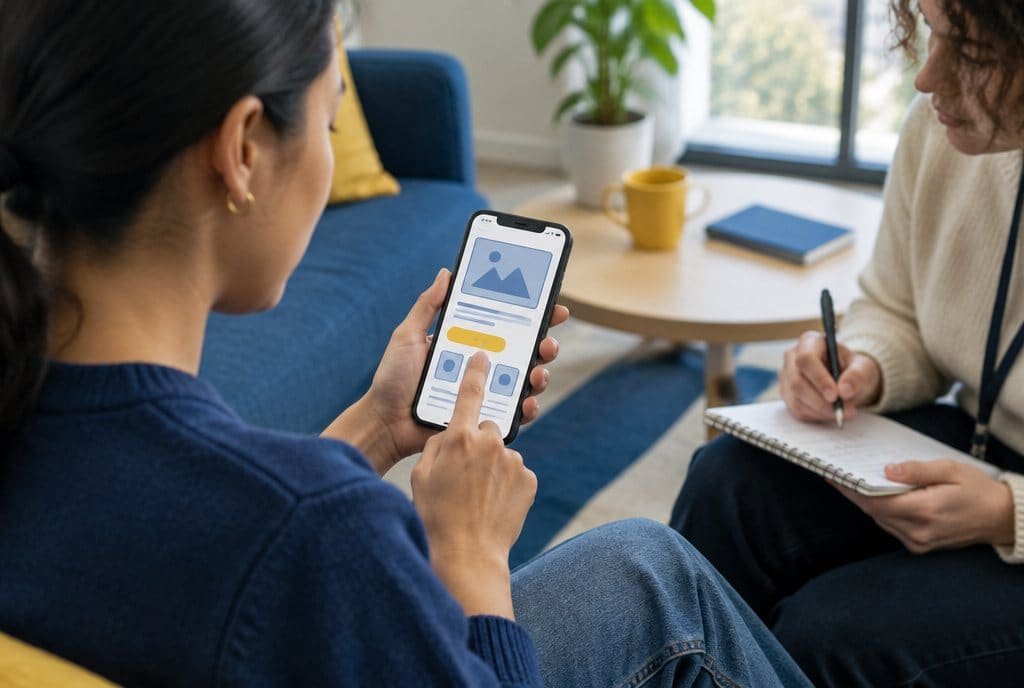
Pilot prototype
One core journey as a clickable prototype, tested on phones.
You get: A prototype your client can tap through.

Stage 3
Write the SOPs
Design handoff, build cadence, device testing and release steps are written once.
You get: A short app delivery runbook.

Stage 4
Scale to more apps
More briefs use the same flow, and we add engineers when two projects overlap.
You get: An app service you can sell more than once.
Timing depends on scope. We agree it with you before work starts.
White-label app development for agencies that sell more than they can staff.
A good fit
You are an agency, studio or consultancy that sells app development but does not want to hire and manage the team for it.
It suits digital agencies, web studios, consultancies, freelancers and in-house marketing teams.
Not a fit
You want us to pitch or contact your client under our own name.
That is our direct service. We will point you to the right page and talk through it.
Common questions
Questions about white-label app development.
Which platforms do you build for?
iOS and Android, native or cross-platform, depending on the brief.
Who owns the code?
Terms are written into the agreement.
Do you support apps after release?
Yes, under a separate maintenance scope.
Can you add features to an existing app?
Yes, after a code review.
Will my client know MMC is involved?
Only if you choose to tell them. We sign an NDA, work under your brand, send deliverables in your format and do not contact your clients unless you ask us to.
How do we get started with white-label app development?
Share the client brief. After the NDA we hold a scoping call and return an outline you can discuss with your client.

Add app development without adding headcount.
On a call, with a senior strategist. We scope your first app development client and agree how we work behind you.
Ready when you are
Add app development without adding headcount.
On a call, with a senior strategist. We scope your first app development client and agree how we work behind you.