White-label content marketing your clients rely on.
Articles, guides, case studies and editorial calendars, written to your client's voice and delivered under your brand.





In short
White-label content marketing is long-form writing and planning that MMC produces for your client while you present it as your agency's work. It covers the editorial plan, articles, guides, case studies and email copy, each researched, fact-checked and written to the client's voice.
- Written to the voice. Each piece follows the client's voice sheet and brand terms.
- Facts checked. A second editor reviews claims and sources before you see a draft.
- Briefs you can reuse. The same briefs work with your own writers when you need them.
Read the full guide
Monday Marketing Company (MMC) delivers content marketing for agencies and works behind your brand. You own the client relationship; we do the work.
How white-label content gets made
Good content starts with a plan and a brief, not a word count. We build briefs from search intent and the client's customers, write to the client's voice, and edit before anything reaches you.
This pairs with white-label SEO for ranking, and mirrors our own content marketing service.
What we handle in white-label content.
Plan, write, edit and hand over.
- Editorial strategy. Topics, formats and a calendar tied to the client's goals.
- Articles and guides. Researched, structured and edited long-form content.
- Case studies. Client stories built from facts the client supplies.
- Email and newsletters. Copy for campaigns and nurture sequences.
- Content refreshes. Updates to older pages that have slipped.
- Briefs for writers. Briefs you can use with your own writers too.
Why agencies choose MMC for white-label content
A delivery partner that behaves like part of your team.
- Facts checked. We verify claims and flag anything unsupported.
- Voice matched. We work from tone notes and sample pieces.
- Under your brand. Deliverables and reports can carry your name and format. You decide what the client sees.
- NDA first. We sign an NDA before we see client details, and we do not approach your clients.
- Educate
- Show
- Prove
- Sell
 LinkedInApprovedRepeat this
 TikTokIn review
 YouTubeApprovedTikTokApprovedYouTubeApprovedRepeat this
The work, shown
How a client article goes from brief to your inbox.
- 01
Turn the client's goals into an editorial plan.
Topics, formats and a calendar come from what the client's buyers ask, written so you can present it.
- 02
Write drafts to the client's voice.
Each piece is researched, structured and written to a voice sheet, with facts the client supplied marked clearly.
- 03
Edit and fact-check before it reaches you.
A second editor checks claims, sources and tone, so you approve a finished draft and not a first pass.
- 04
Publish, refresh and report.
Pieces go out as agreed, older pages are refreshed, and the report ties each piece to its purpose.
Where agency delivery goes wrong
Five places white-label content goes wrong.
- 1
Brief
The brief says everyone.
A piece for everybody reads like it is for nobody, and edits go round in circles.
How we run it. We ask for one reader and one question per piece, and write it into the brief before drafting.
- 2
Calendar
Topics are picked by whoever shouts loudest.
A calendar with no reason behind it leaves you defending choices to the client.
How we run it. Each topic is tied to a buyer question or a goal, and the plan is sent for your sign-off.
- 3
Quality
Articles repeat what is already online.
A piece that adds nothing earns no links, shares or rankings.
How we run it. Briefs ask for something new: client data, expertise or a clear point of view. Editors check for it.
- 4
Reuse
One format, used everywhere.
A post that could be an email, a case study or a short video is left as a blog post.
How we run it. Each strong piece is mapped to other formats, so one idea works across the client's channels.
- 5
Distribution
Published, then forgotten.
Without a plan to share and refresh it, the piece goes quiet.
How we run it. We agree distribution with you, mark pieces to refresh and report on what each one did.
Your onboarding
How your first content client gets onboarded.

Stage 1
NDA and voice sheet
We sign the NDA, then collect the client's voice, terms to use and avoid, and the facts they can supply.
You get: A voice sheet every draft follows.

Stage 2
Pilot piece
One article goes from brief to fact-checked draft, so you see how we research, write and edit.
You get: A finished piece to judge us on.

Stage 3
Brief and edit SOPs
Brief format, fact-check steps, review rounds and file naming are written down.
You get: A routine that keeps quality steady.

Stage 4
Scale the calendar
A monthly calendar runs on that routine, and more clients join on the same one.
You get: Content for more clients without more hires.
The stages show the order of onboarding, not a promise of timing. The client's approvals and subject experts decide how long each stage takes.
White-label content marketing for agencies that sell more than they can staff.
A good fit
You are an agency, studio or consultancy that sells content marketing but does not want to hire and manage the team for it.
It suits digital agencies, web studios, consultancies, freelancers and in-house marketing teams.
Not a fit
You want us to pitch or contact your client under our own name.
That is our direct service. We will point you to the right page and talk through it.
Common questions
Questions about white-label content marketing.
Do you use AI to write?
We use AI for research and drafting support where it helps, and every piece is edited and fact-checked by a person. Tell us if a client wants none.
Who owns the content?
Ownership and usage rights are written into the agreement before work starts.
Can you write for technical topics?
Yes, with subject-matter notes or interviews supplied through you.
Do you publish to the client's site?
We can upload to the CMS if given access, or hand over files.
Will my client know MMC is involved?
Only if you choose to tell them. We sign an NDA, work under your brand, send deliverables in your format and do not contact your clients unless you ask us to.
How do we get started with white-label content marketing?
Share the client's voice notes and goals. After the NDA we propose a topic plan and one sample piece.

Add content marketing without adding headcount.
On a call, with a senior strategist. We scope your first content marketing client and agree how we work behind you.
Run the numbers, read the method
Tools and guides behind the numbers.
 CalculatorCAC runwayHow long a new brand burns before it turns.Open the calculator
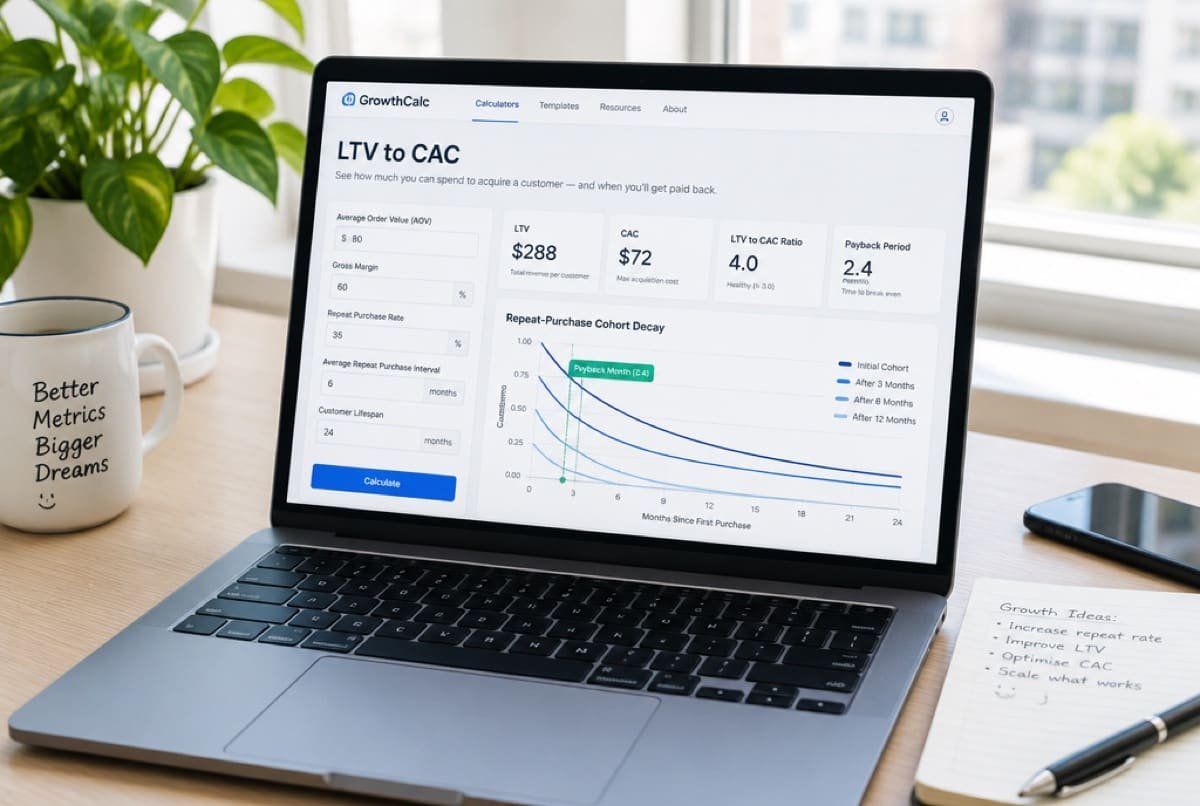 CalculatorLTV:CACWhat a customer is worth and how fast you recover it.Open the calculator
 GuideHow D2C brands test ad creativeA repeatable way to test hooks and angles, read the results against your break-even ROAS and refresh creative before ads tire. Written for D2C brands.Read the guide
 GuideWhy ad dashboards over-count salesMeta, Google and your store each count their own conversions, so the totals never match. Here is why dashboards over-count and how to read results anyway.Read the guide
Ready when you are
Add content marketing without adding headcount.
On a call, with a senior strategist. We scope your first content marketing client and agree how we work behind you.