What contribution margin is
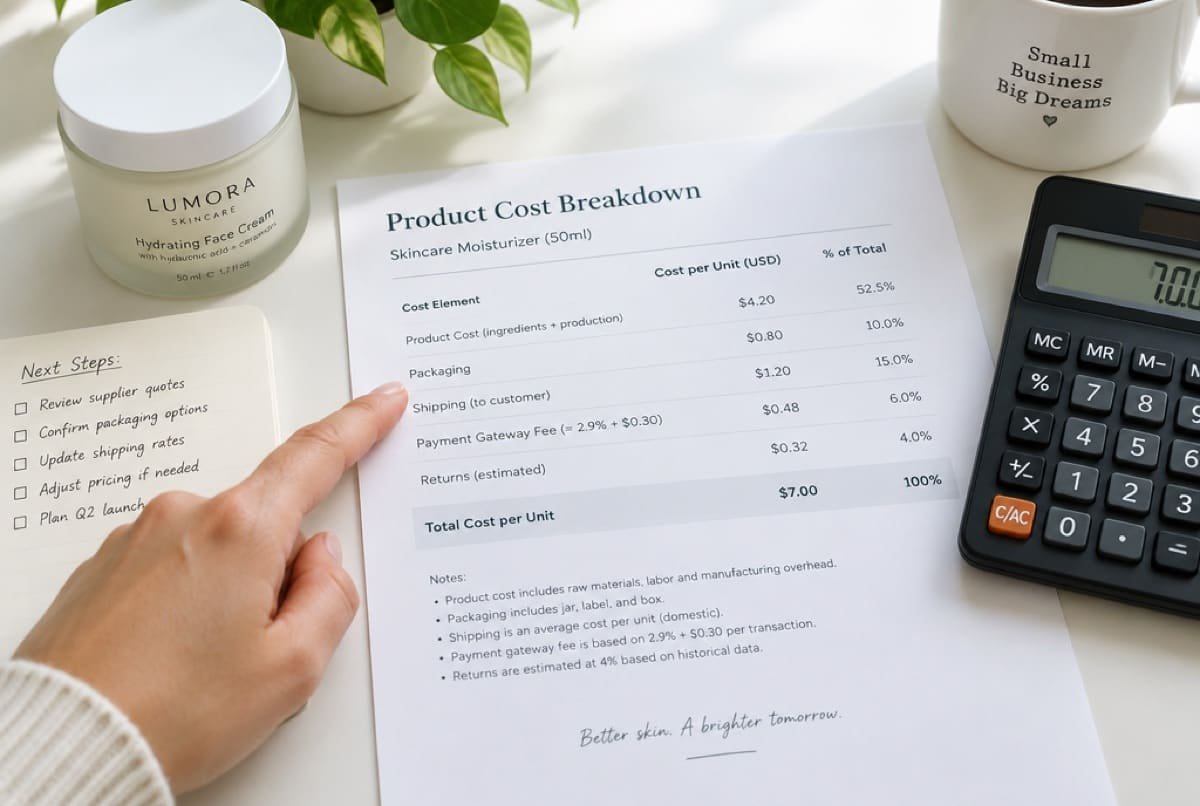
Contribution margin is the money an order leaves behind after the costs that vary with that order. For a D2C brand these are product cost, packaging, shipping, payment gateway fees and the cost of returns. Rent, salaries and software are fixed costs and sit outside it.
It matters because it is the pool your advertising has to be paid from. Whatever an order leaves behind before ads is the most you can spend to win that order and still break even.
Why revenue and platform ROAS mislead
ROAS divides the revenue an ad platform reports by what you spent on ads. It says nothing about what it cost to make and deliver those orders. Two stores can both report the same ROAS and one can be profitable while the other loses money on every sale.
Also check whether the revenue in your ROAS includes tax. Compare like with like: use the same basis for the ROAS you read and the margin you calculate.

How to work it out, step by step
- Start with the order valueUse the average order value, before tax if your costs are before tax.
- Subtract product costWhat it costs you to buy or make the items in that order.
- Subtract packaging and shippingInclude the forward shipping you pay, and cash-on-delivery handling if you offer it.
- Subtract payment feesGateway and collection charges on the order.
- Subtract a returns allowanceThe average cost of returns and failed deliveries, spread across all orders.
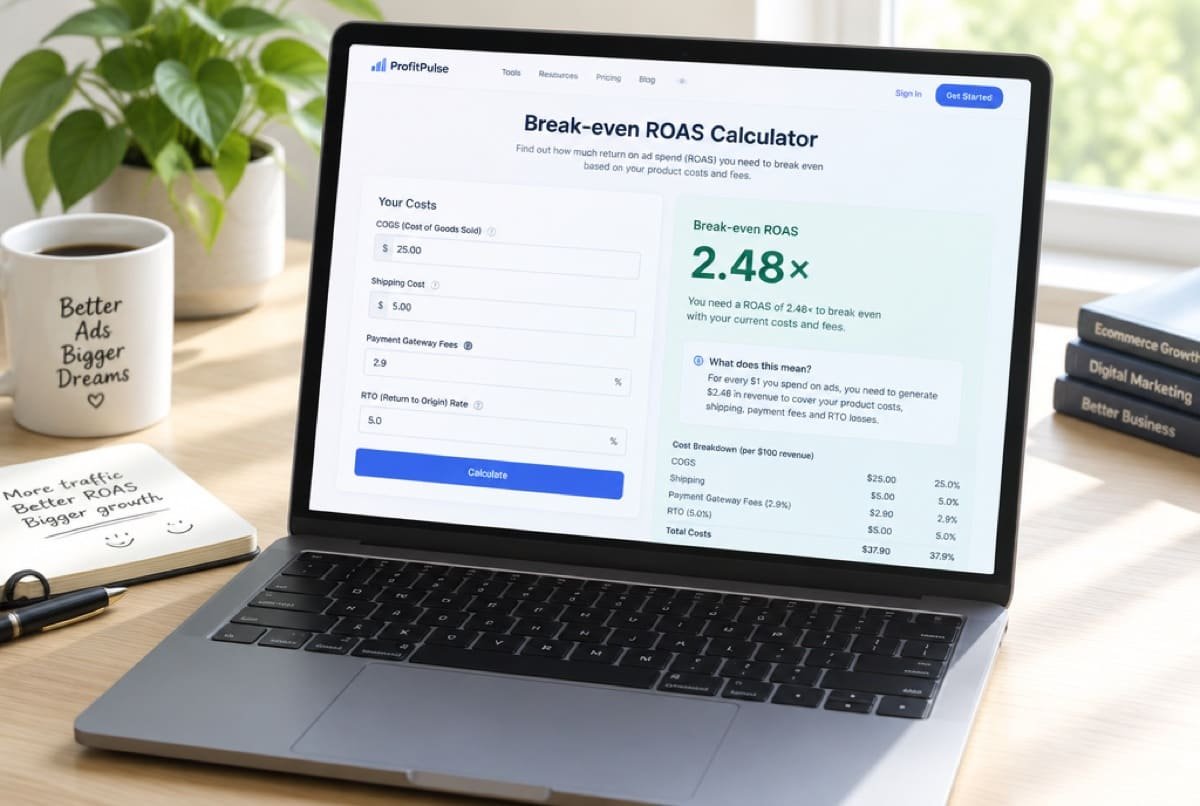
- Divide what is left by the order valueThat is your contribution margin before ads. Divide 1 by it to get break-even ROAS.
A worked example
The numbers below are made up to show the method. Use your own.
| Line | Per order (₹) | Share of order value |
|---|---|---|
| Order value (before tax) | 1,000 | 100% |
| Product cost | 300 | 30% |
| Packaging | 40 | 4% |
| Shipping | 90 | 9% |
| Payment fees | 20 | 2% |
| Returns allowance | 50 | 5% |
| Contribution before ads | 500 | 50% |
Illustrative example, not a benchmark
Why returns and failed deliveries change the answer
A returned or refused order earns nothing but still costs shipping, often both ways, plus packaging and handling. For brands that ship cash on delivery, this can move break-even ROAS by a full point or more.
That is why the returns allowance is its own line. If you do not include it, your break-even ROAS looks lower than it really is, and campaigns look safer than they are.

How to use break-even ROAS
- Set a floor: campaigns below break-even ROAS need a fix or a pause, unless they are bringing customers who reorder.
- Set a target above it: the gap between your ROAS and break-even is the margin your ads leave.
- Change it when your costs change: a price rise, a cheaper courier or lower returns all move break-even ROAS.
- Read repeat customers separately. A first order that only breaks even can still pay off if the customer comes back. See the LTV:CAC calculator.
Work it out with your own numbers
The break-even ROAS calculator does the sums above with your costs, and the unit economics calculator scales one order into a monthly profit and loss. Both are free to use.
If you would like a senior strategist to read your figures with you, bring them to the audit call.