Why creative needs a system
On paid social, the ad is often what decides whether someone stops, and the targeting matters less than it used to. That makes creative one of the main things a brand controls. Without a system, teams make ads on instinct and cannot say why one worked.
A testing system turns each ad into a lesson. Over a few rounds you build a clear picture of which hooks, angles and formats work for your buyers.
What to test
- Hook: the first seconds or first line that stops the scroll.
- Angle: the reason to buy, such as a problem solved, a result, a comparison or social proof.
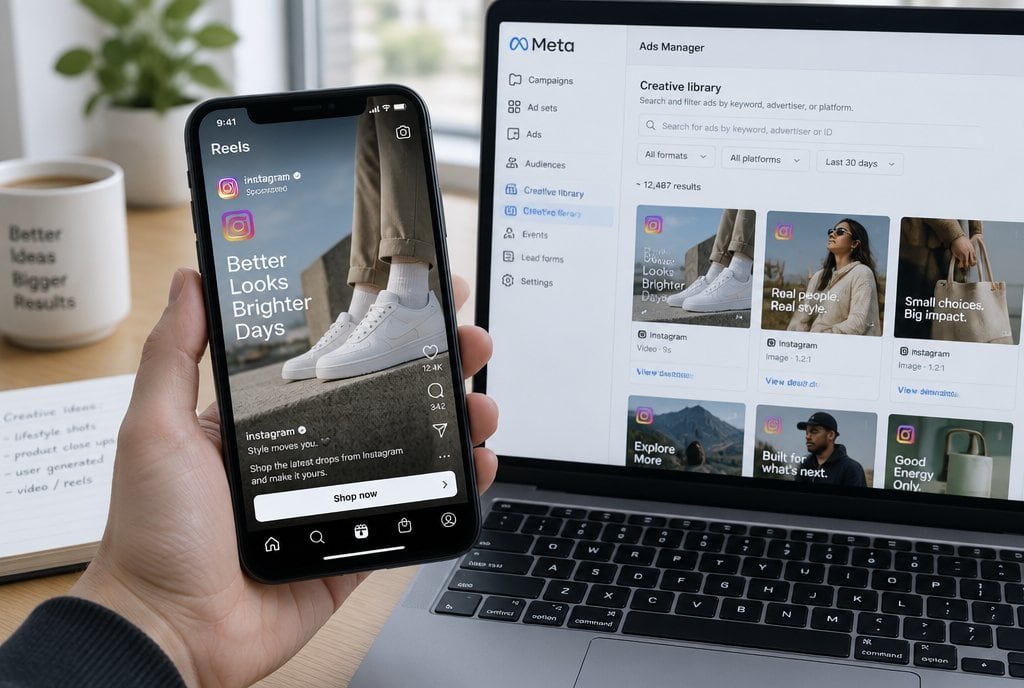
- Format: creator video, product demo, static image, carousel.
- Offer: bundle, discount or free shipping, tested separately from the creative idea.
How to run a test
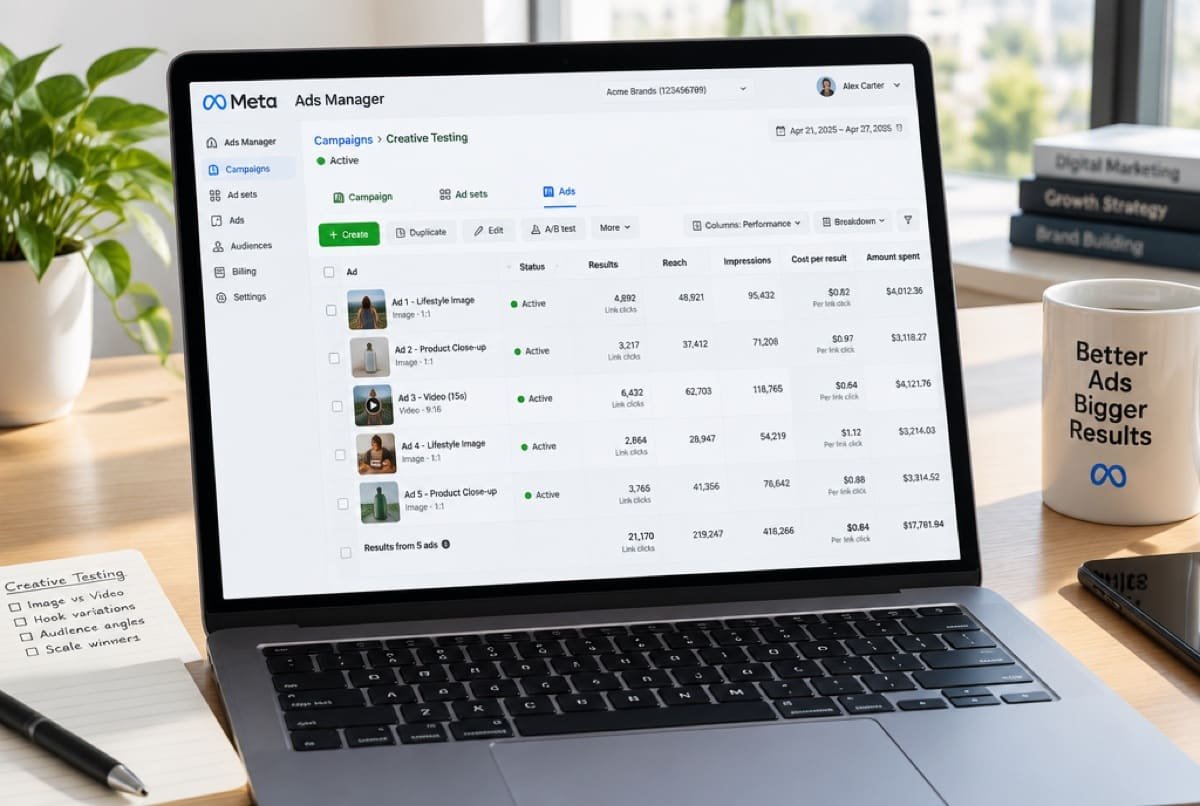
- Pick one questionFor example, does a problem-first hook beat a product-first hook?
- Make variants that differ in one wayKeep everything else the same so the difference can be read.
- Decide the rules firstAgree the budget, the length and the metric before the test starts, so the result is not judged after the fact.
- Keep testing apart from scalingRun tests in their own campaign, then move winners into your scaling campaigns.
- Log the resultWrite down what won and the reason you think it won, so the next round starts smarter.
Spend the most time on the hook
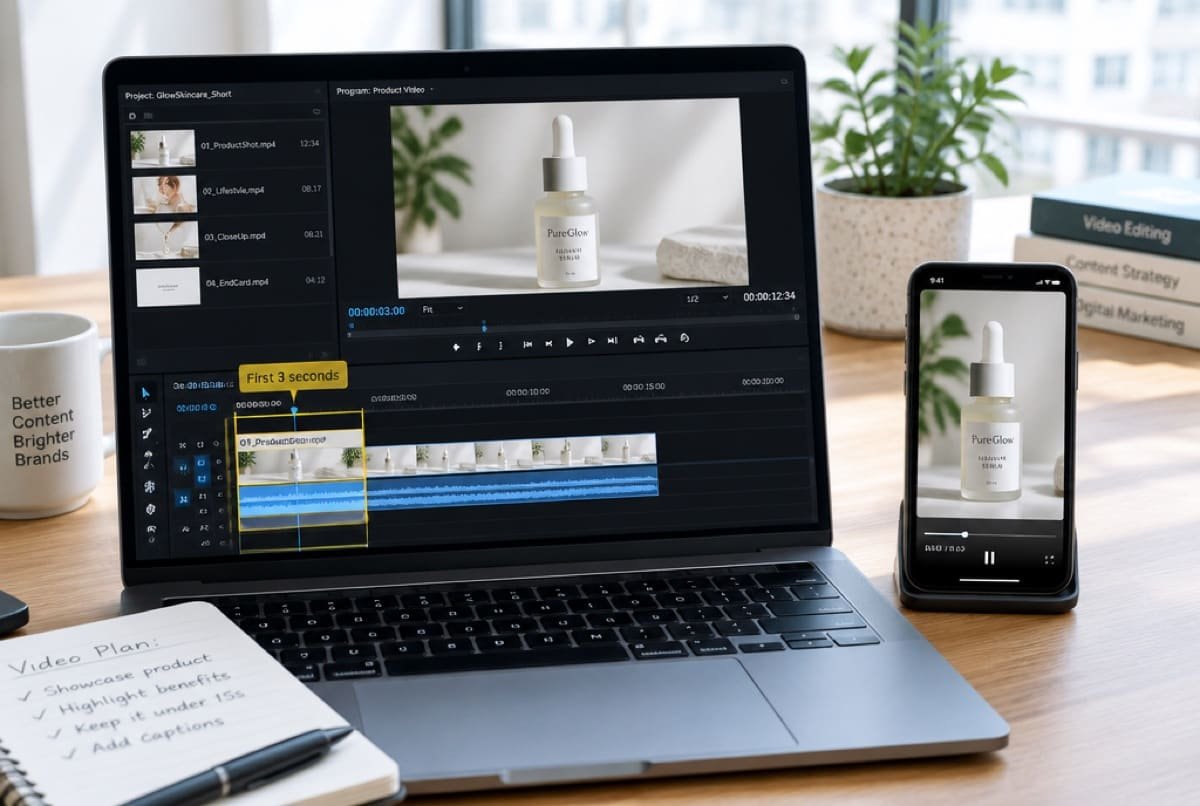
For video, the first three seconds decide whether the rest is watched. Test several openings of the same video before you test whole new videos. It is faster and cheaper, and it shows what earns attention.
Read hook performance on how many people keep watching, and read the ad as a whole on cost per purchase. An ad that gets attention but does not sell needs a different message, not a different opening.
How to read the results
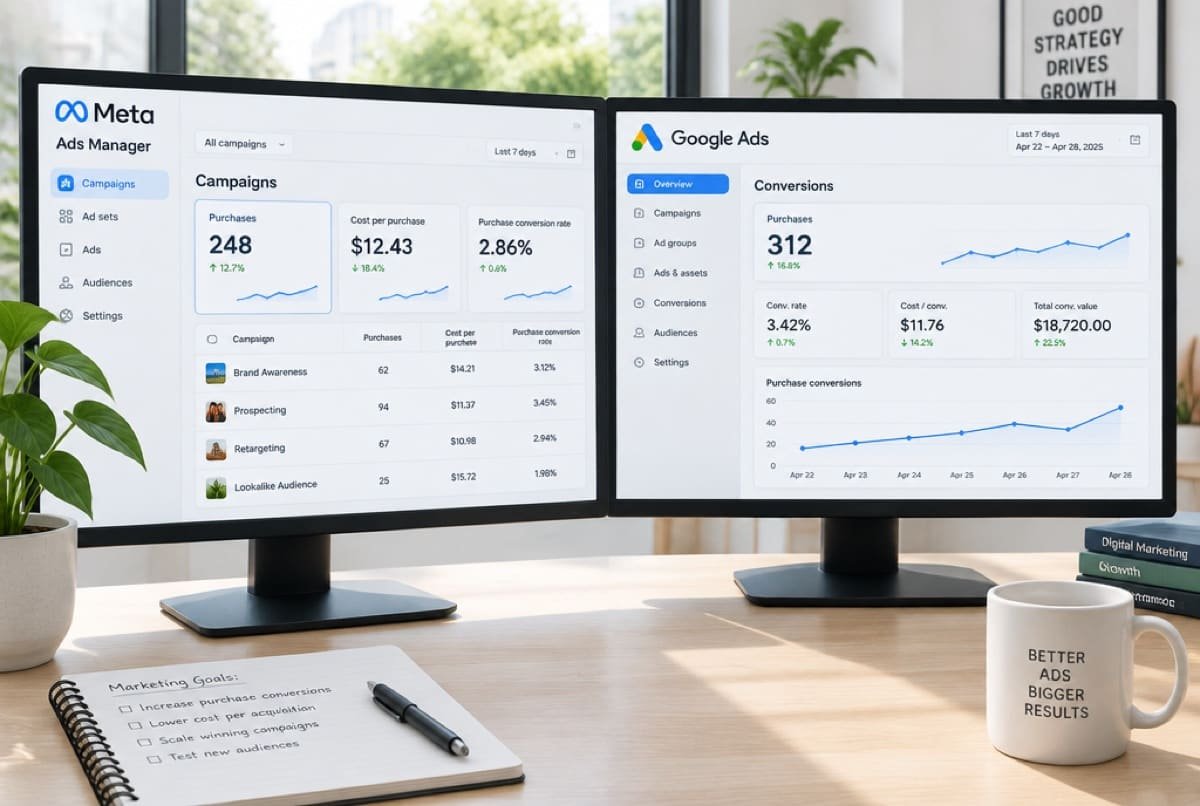
Judge ads on cost per purchase read against your break-even ROAS, not on clicks or likes. Use attention measures such as hold rate to work out why an ad won or lost.
Be careful with small samples. A result from a handful of purchases can change with more spend, so let each test collect enough results before you call a winner, and confirm the winner in a second round. Also remember that platforms over-count, so compare ads against each other inside one platform.
Refresh before ads tire
Ads wear out as the same people see them again and again. Signs include rising frequency, falling click-through and a rising cost per purchase for the same ad.
Plan the next round of creative before the current winners tire. Keep the winning idea and change the hook, the creator or the format, so the ad feels new without losing what worked.

Where MMC fits in
MMC plans the test, produces the creative and reads the results. See UGC and video for the creative side and Meta Ads for how the campaigns are run.