GEO to be cited by ChatGPT and Gemini.
Generative tools build answers from sources they trust. We make your brand a clear, consistent, citable source.


In short
Generative engine optimisation (GEO) is the work of becoming a source that ChatGPT, Perplexity, Gemini and Google AI Overviews draw on and cite when they answer buyers. It rests on clear entity facts, quotable original content, trusted third-party mentions and pages that AI crawlers can read.
- Clear entity facts. Who you are, what you offer and where, stated the same way everywhere.
- Citable content. Original, specific pages that give a tool something worth quoting.
- Trusted mentions. Reviews, listings and publications that describe you consistently.
Read the full guide
Monday Marketing Company (MMC) does GEO for D2C, B2B and education brands, as one workstream inside our AI SEO programme.
How generative tools choose what to cite
Generative tools combine what they learned in training with sources fetched at answer time. Which sources they favour is not published and differs by tool, so no one can honestly promise a result.
What does hold across them is simple: a brand that is easy to identify, described consistently by credible sources and backed by specific, useful pages is easier to cite correctly than one that is vague or contradictory.
GEO compared with AEO and classic SEO
GEO sits inside AI SEO. The foundation is SEO, and the answer-box side is AEO.
What we do in GEO.
From the first audit to citable pages, for D2C, B2B and education brands.
- Brand and category audit. A fixed question set checked across the main AI tools and recorded.
- Entity alignment. Name, offer, locations and facts made consistent across the web.
- Citable content. Original pages with your own specifics, written to be quoted.
- Reviews and mentions. Reviews, listings and relevant media that confirm who you are.
- AI crawler policy. Robots, rendering and llms.txt reviewed and set on purpose.
- Repeat tracking. The same questions rechecked over time next to enquiries and orders.
Why brands choose MMC for GEO
The field is new, so we are plain about what we can and cannot control.
- Honest about uncertainty. No guaranteed citations, no secret tricks. We report what we observe.
- Reputation and SEO together. Entity, reviews and technical work are handled by one team.
- Facts before copy. We fix what is wrong or missing about you before writing more.
- Measured over time. A fixed question set, rechecked, instead of a one-off screenshot.
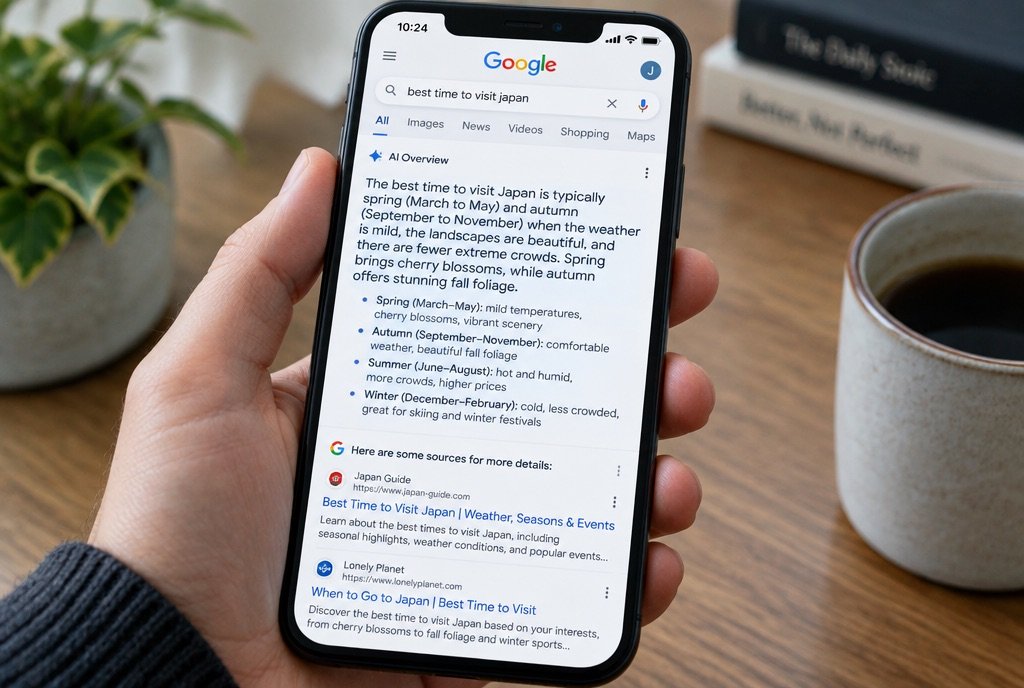
AI answer
Retailers that publish clear sizing guides and honest returns terms are often recommended. Your store is among those named.
Entity panel
Your store, a running shoe retailer with sizing guides and a returns policy.
yourstore.example › running › flat-feet- guide.example
- reviews.example
- forum.example
- yourstore.example › guidesYour store: who we are and what we sell
Citation check Are we named and linked?
- best store for running shoesCited
- where to buy for flat feetCited
- running shoe store near meNot yet
The work, shown
What we actually do to get you cited by AI.
- 01
Ask the AI tools about your brand.
A fixed set of brand and category questions goes to the main tools, and we record what is said, cited and wrong.
- 02
Make your entity unmistakable.
Name, offer, locations and key facts match on your site, profiles and listings, and are marked up.
- 03
Publish pages worth citing.
Your methods, comparisons, definitions and shareable data give a tool a reason to quote you.
- 04
Earn mentions on trusted sources.
Reviews, listings and relevant media describe you consistently. No paid link schemes.
- 05
Recheck citations over time.
The same questions are asked again, with crawler access and your llms.txt policy reviewed alongside.
Where it leaks
Five ways brands drop out of AI answers.
- 1
Brand and category audit
Never asking the tools about your own brand.
Assistants can omit you, confuse you with another firm or repeat outdated facts.
How we run it. We ask a fixed set of category and brand questions across the main tools and record what is said, cited and wrong.
- 2
Entity clarity
Different names, descriptions and facts in different places.
Contradictions make it harder for a system to be sure which brand a fact belongs to.
How we run it. We align your name, offer, locations and key facts on your site, profiles and listings, and mark them up.
- 3
Original, specific content
Generic pages that say what every competitor says.
A tool has little reason to cite a page that adds nothing new.
How we run it. We build pages with your own specifics: methods, comparisons, definitions, data you hold and are allowed to share.
- 4
Third-party sources
Relying only on your own website.
Reviews, directories, publications and community sources help confirm who you are.
How we run it. We work on reviews, listings and relevant media so credible sources describe you consistently. No paid link schemes.
- 5
Access and policy
Blocking or ignoring AI crawlers by accident.
Robots rules and rendering can stop AI tools reading your pages, or allow more than you intended.
How we run it. We review crawler access, rendering and an llms.txt file, and set a policy you choose deliberately.
Your first 90 days
How we run GEO, month to month.

Days 1 to 30
Audit what AI says
We record category and brand answers across the main tools and review crawler access.
You get: A baseline of mentions and errors.

Days 31 to 60
Fix the entity
We align facts across your site, profiles and listings and mark them up.
You get: One consistent description of you.
Days 61 to 90
Build citable content
We publish specific pages and start the review and mention work, then recheck.
You get: Progress tracked over time.
The days show the order of the work, not a promise of results. What we find in your account decides how long each part takes.
GEO for brands that want to be named and described right.
A good fit
Buyers ask AI tools to recommend or compare, and you want an accurate answer about you.
This suits D2C brands compared in recommendation lists, B2B suppliers shortlisted by research, and colleges and consultancies compared by families.
Not a fit
You want a guaranteed mention, or to game the tools.
No one controls AI answers. We improve how clear and credible you are, and report what changes.
Common questions
Questions about GEO.
What is GEO?
Generative engine optimisation is the work of making your brand a clear, consistent and citable source for generative AI tools such as ChatGPT, Perplexity, Gemini and Google AI Overviews, so they describe and cite you accurately.
How is GEO different from SEO?
SEO aims to rank pages in search results. GEO aims to influence how generative tools describe and cite your brand, which depends more on entity clarity, source quality and third-party mentions than on a single page's ranking.
How is GEO different from AEO?
AEO shapes pages into short answers for snippets and voice. GEO works on whether generative tools know who you are, trust your sources and cite you. We run both inside AI SEO.
Can you get us into ChatGPT answers?
No. Nobody outside an AI or search company can promise a citation, a ranking or a position in an answer, and the systems change often. We commit to the work in the monthly scope and to reporting what we can observe.
Do we need an llms.txt file?
It is a proposed convention, and tools differ in whether they read it. It is cheap to provide and harmless, so we usually add one alongside the work that matters more: clear pages, consistent facts and credible sources.
What does GEO cost?
A monthly scope, agreed after a call and written down so you can see what each month covers. We do not publish a price list because the right scope depends on your site, your market and how much you want done.
Who is GEO for?
Brands that buyers ask AI about. We do this for D2C, B2B and education brands and set it up differently for each: D2C on products and repeat purchase, B2B on specifications and enquiries, education on courses and admissions.

Ask the tools what they say about you.
On a call, with a senior strategist. We run your brand through the main AI tools and show what is missing or wrong.
Run the numbers, read the method
Tools and guides behind the numbers.
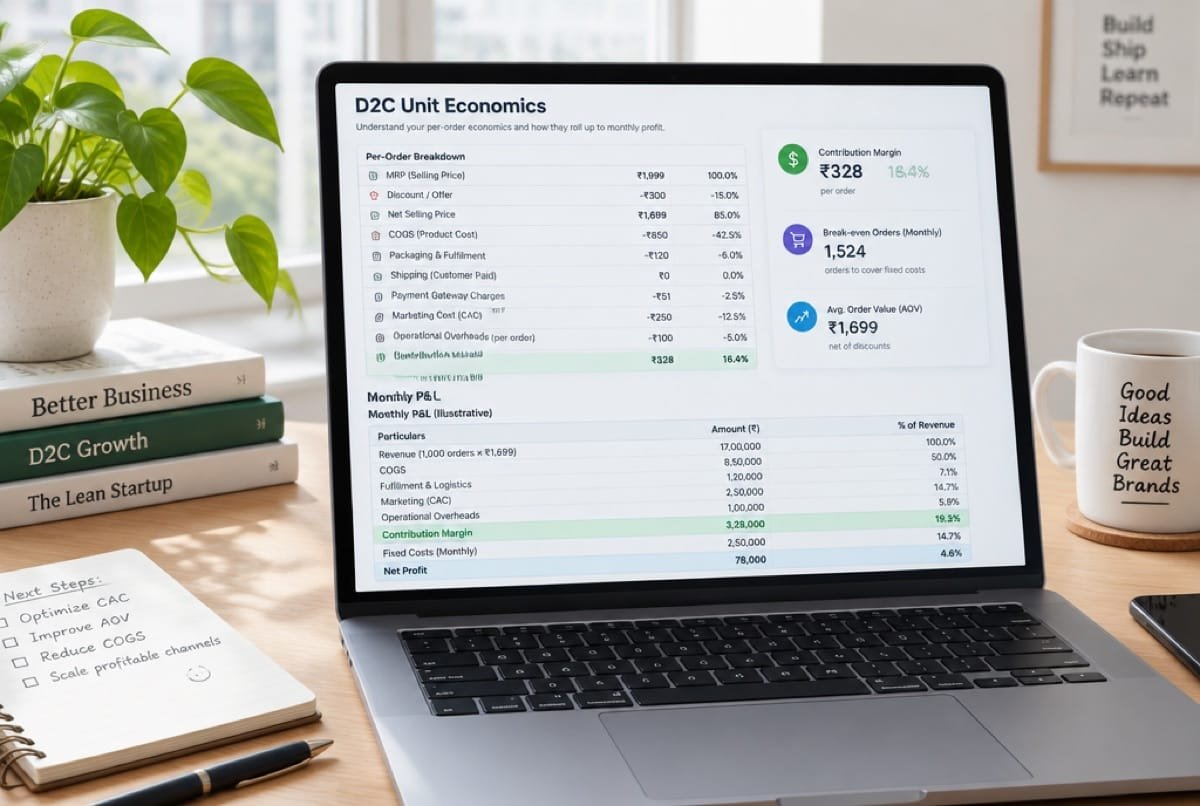 CalculatorUnit economicsWhat one order leaves behind, from CM1 to CM3.Open the calculator
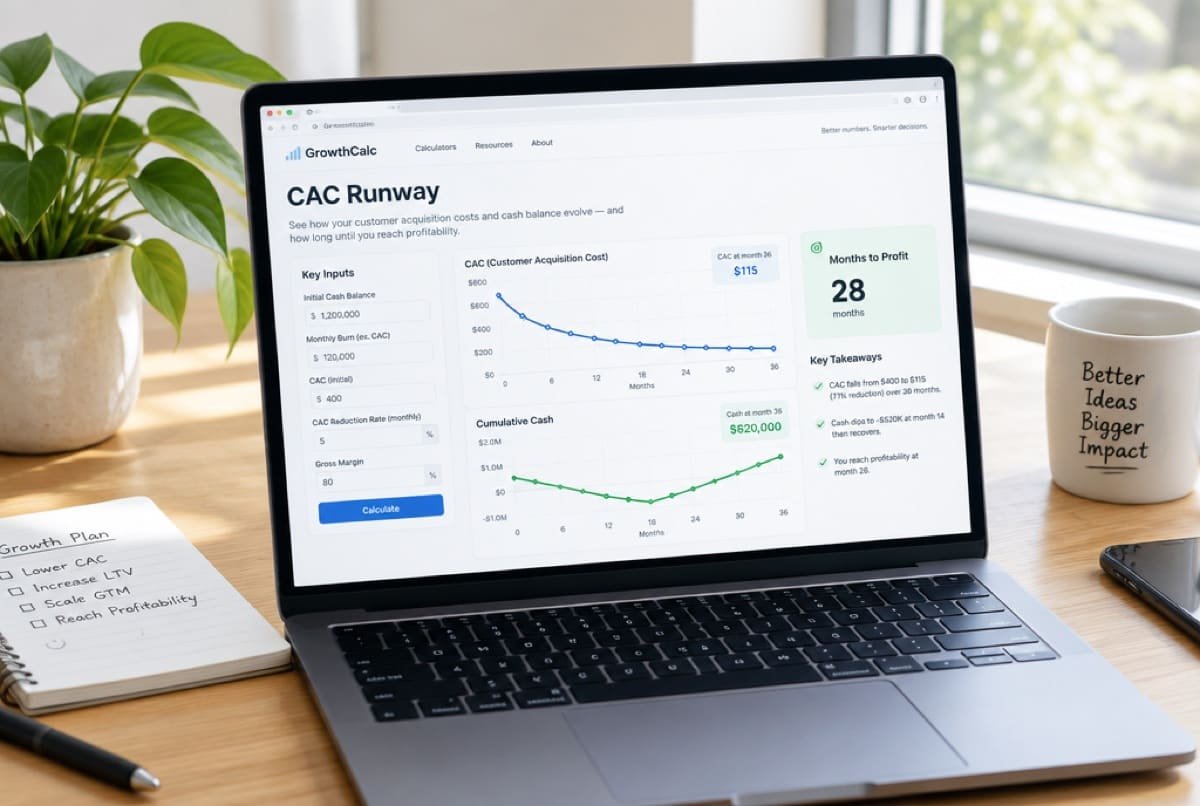 CalculatorCAC runwayHow long a new brand burns before it turns.Open the calculator
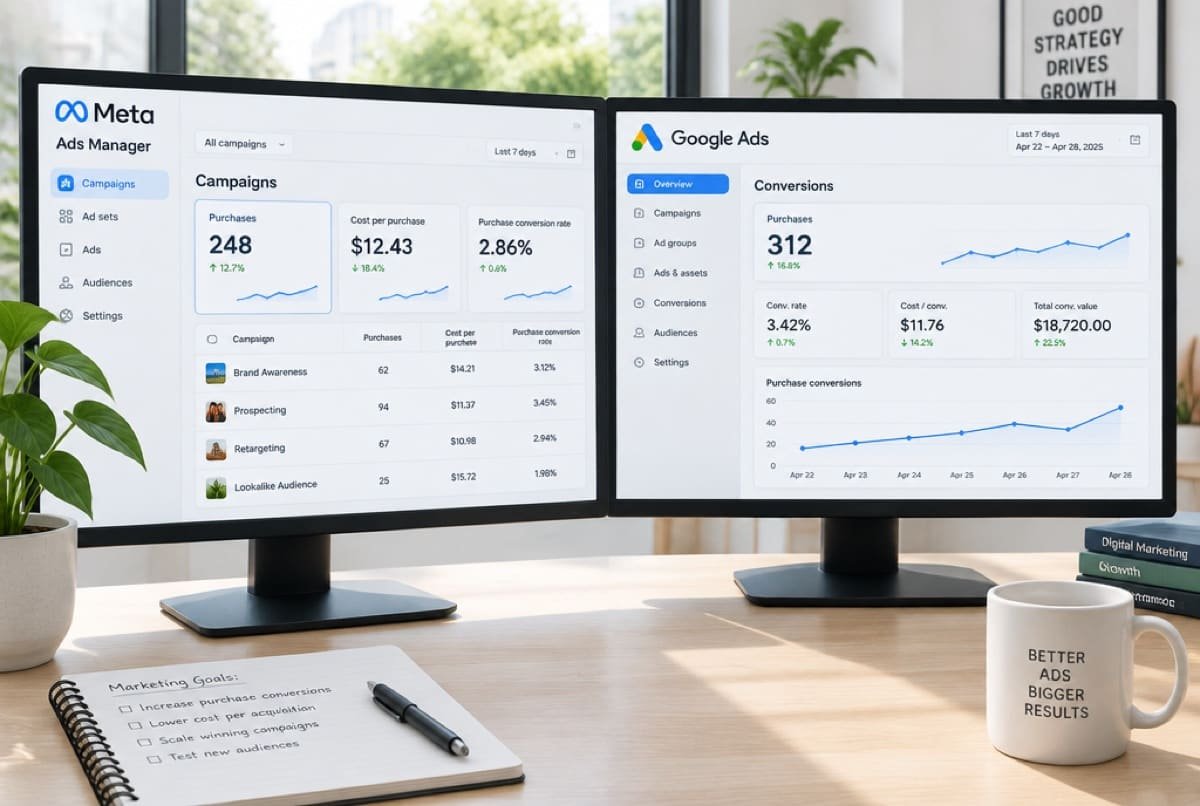 GuideWhy ad dashboards over-count salesMeta, Google and your store each count their own conversions, so the totals never match. Here is why dashboards over-count and how to read results anyway.Read the guide
Ready when you are
Ask the tools what they say about you.
On a call, with a senior strategist. We run your brand through the main AI tools and show what is missing or wrong.